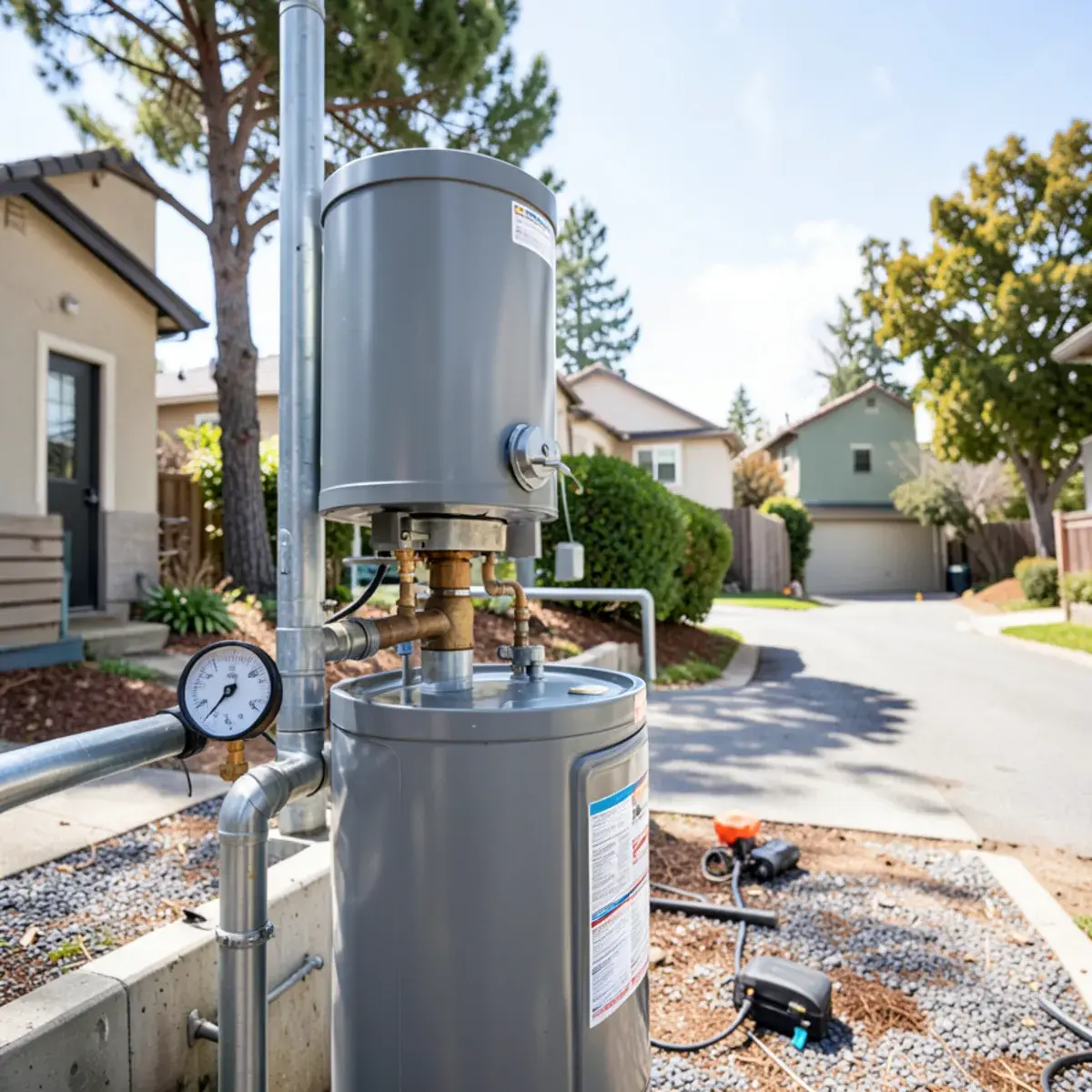
If you're installing or replacing a water heater in California, you may be told you need a thermal expansion tank. Is that real, or an upsell? It's real — and in many Brentwood homes, it's required by code. Here's what an expansion tank does, when California requires one, and how to tell if your home is a "closed system."
What an Expansion Tank Does
When water heats, it expands. In an "open" plumbing system, that extra volume can push back into the city main, relieving the pressure. But many homes today have a check valve, pressure regulator, or backflow preventer on the incoming line that blocks backflow — making them "closed systems." In a closed system, the expanding water has nowhere to go, so pressure spikes every heating cycle, stressing the tank, valves, and fixtures.
A thermal expansion tank gives that expansion somewhere to go. It's a small tank with an air-filled bladder that absorbs the extra volume and keeps system pressure stable, protecting your whole plumbing system and reducing nuisance discharge from the TPR valve.
When California Code Requires One
California code requires a thermal expansion tank on closed systems — meaning if your home has a pressure regulator or backflow device on the main, an expansion tank is mandatory with a new water heater. It's also recommended whenever static water pressure exceeds 80 PSI. Because so many homes now have pressure regulators (and Brentwood's water infrastructure often calls for them), expansion tanks are a routine part of code-compliant installs here. See the full picture in our California water heater code guide.
How to Tell If You Have a Closed System
Look at where the water main enters your home. If you see a bell-shaped pressure regulator or a backflow preventer, you almost certainly have a closed system. Other clues: the TPR valve periodically discharges water, faucets briefly spit, or you hear pressure-related banging. A simple pressure gauge on a hose bibb confirms whether your static pressure is in a safe range or pushing past 80 PSI.
Don't Skip It
An expansion tank is inexpensive relative to the damage uncontrolled pressure causes — premature tank failure, leaking valves, and stressed fixtures. If a quote leaves it out on a closed system, the install isn't code-compliant. We include the right expansion tank, correctly sized and pre-charged, on every install that needs one.
Installation and the One Thing People Forget to Check
A thermal expansion tank installs on the cold-water line near the water heater and is straightforward for a licensed plumber to add during an install or as a standalone job. The detail homeowners often miss is that the tank has an internal air bladder pre-charged to match your home's water pressure — and if that charge is wrong or the bladder eventually fails, the tank can't do its job. A waterlogged expansion tank is a surprisingly common cause of a TPR valve that keeps discharging even though a tank is present.
So an expansion tank isn't quite "install and forget." It's worth checking the air charge against your static pressure periodically and tapping the tank — a healthy one sounds hollow on top and solid at the bottom; uniformly solid means it's waterlogged and due for replacement. We verify and set the charge correctly on installation and check it during annual maintenance.
Frequently Asked Questions
Do I need an expansion tank for my water heater?
You need one if your home is a closed system — that is, it has a pressure regulator or backflow preventer on the main water line. California code requires it in that case, and it's also recommended when static pressure exceeds 80 PSI.
How do I know if I have a closed plumbing system?
Check where the water main enters your home. A bell-shaped pressure regulator or a backflow preventer indicates a closed system. Frequent TPR valve discharge or pressure-related banging are additional clues.
What does a thermal expansion tank actually do?
It absorbs the extra water volume created when water heats and expands, keeping system pressure stable. On a closed system this prevents pressure spikes that stress the water heater, valves, and fixtures.
What happens if I skip the expansion tank on a closed system?
Pressure spikes with every heating cycle, which can shorten the water heater's life, cause the TPR valve to discharge repeatedly, and damage fixtures. It also makes the installation non-compliant with California code.
Need help from a licensed Brentwood plumber?
We provide free on-site assessments and upfront quotes — and we pull the permit and handle the city inspection for you.