It sounds like an exaggeration, but yes — a water heater can explode, and when one does the result is genuinely dangerous. The good news is that these failures are rare and almost entirely preventable with one critical safety device and a few simple checks. Here's how the danger builds and how to make sure it never happens in your home.
How a Water Heater Can Explode
A tank water heater is a sealed vessel full of water being heated. If the heating control fails and the water keeps heating unchecked, pressure climbs as the water expands and turns toward steam. Without a working relief path, that pressure can eventually rupture the tank — releasing superheated water and steam with explosive force. The trigger is almost always a combination of overheating and a failed or missing safety valve.
The TPR Valve: Your Main Defense
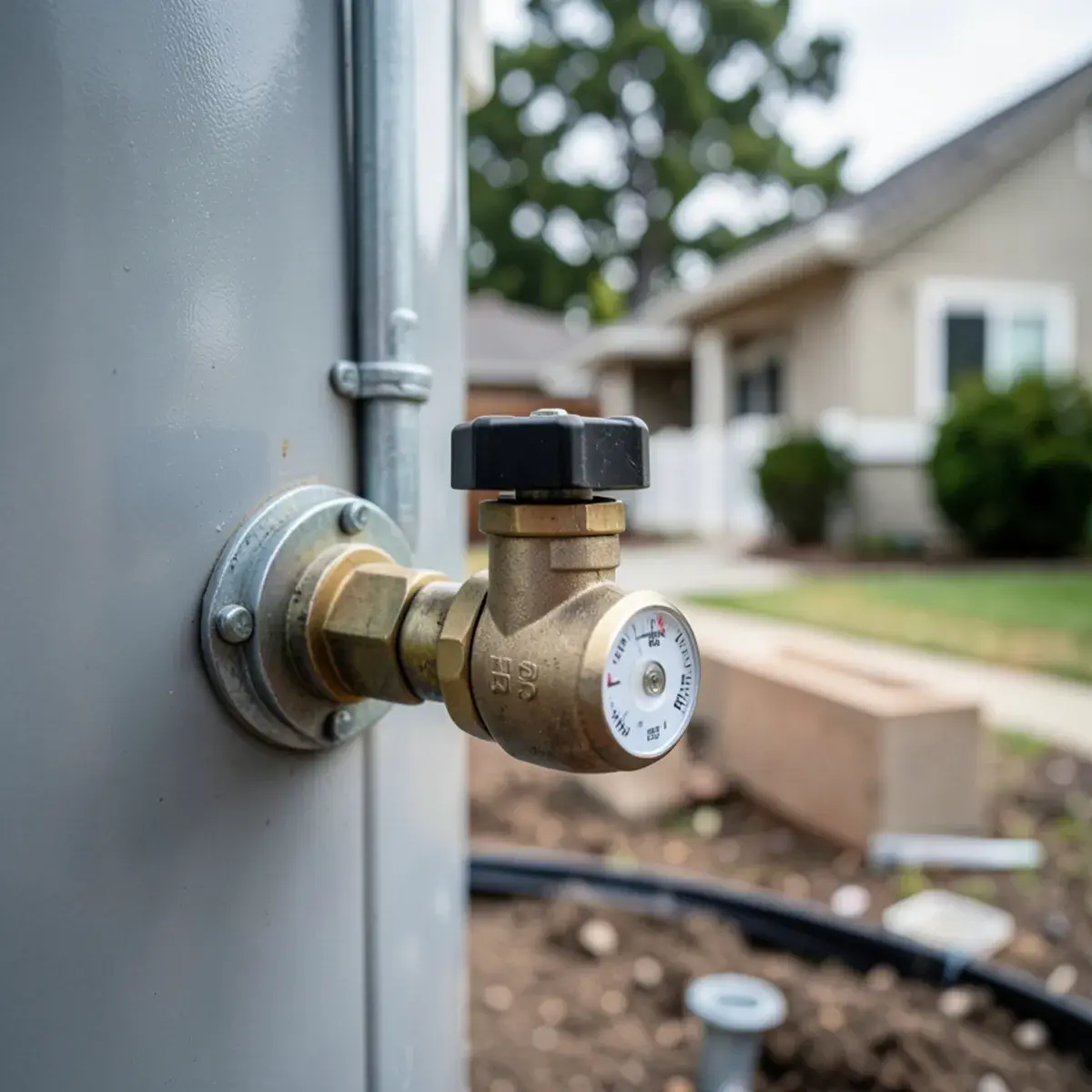
Every tank has a temperature-and-pressure-relief (TPR) valve. If temperature or pressure exceeds safe limits, it opens and vents to relieve the buildup — stopping the dangerous chain reaction before it starts. This single valve is the most important safety component on the unit.
For it to work, it needs a proper discharge line routed down to near the floor, so any release is directed safely. A TPR valve that's been capped, plugged, or left without a discharge pipe is a serious hazard. Our TPR valve replacement service ensures yours functions and is routed to code, detailed in our California water heater code guide.
Pressure and Closed Systems
Excess pressure isn't always about heat. Many Brentwood homes are "closed systems" (with a pressure regulator or backflow preventer), where thermal expansion has nowhere to go and pressure spikes. Code requires a thermal expansion tank to absorb it — see Do I Need an Expansion Tank?. A pressure regulator keeps incoming pressure in a safe range.
Warning Signs to Take Seriously
Watch for water discharging from the TPR valve, a tank that's extremely hot to the touch, rumbling that won't stop after a flush, or a temperature setting cranked unusually high. Any of these warrant prompt attention — and if a valve is actively releasing or you smell gas, treat it as an emergency.
Prevention Is Simple
Test the TPR valve periodically, keep the temperature at a safe 120°F (see water heater temperature), maintain an expansion tank if your system is closed, and have the unit inspected during annual maintenance. Done routinely, these steps make a catastrophic failure effectively a non-issue.
Testing the TPR Valve: Your Best Safety Habit
Because the TPR valve is what stands between normal operation and a dangerous failure, the single best safety habit is testing it periodically — most manufacturers suggest about once a year. The test is simple: with a bucket positioned under the discharge pipe, briefly lift the valve's test lever and let a little water flow, then release it and confirm the flow stops cleanly. If water keeps trickling after you release the lever, or nothing comes out at all, the valve isn't sealing or functioning correctly and should be replaced.
Pair that with keeping the temperature at a safe 120°F, maintaining an expansion tank on a closed system, and having the unit looked at during annual maintenance, and a catastrophic failure goes from "rare" to effectively a non-issue. If you're not comfortable testing the valve yourself, it's a standard part of any maintenance visit.
Frequently Asked Questions
Can a water heater really explode?
Yes, though it's rare. If a heating control fails and the safety relief valve is missing or non-functional, pressure can build until the tank ruptures violently. A working TPR valve prevents this.
What does the TPR valve do?
The temperature-and-pressure-relief valve opens to vent water when temperature or pressure exceeds safe limits, releasing the buildup before it can rupture the tank. It must have a proper discharge line routed near the floor.
How can I prevent a water heater explosion?
Keep a functioning TPR valve with a code-compliant discharge line, maintain a thermal expansion tank on closed systems, set the temperature to a safe 120°F, and have the unit inspected annually. These simple measures prevent dangerous pressure buildup.
Is water dripping from the TPR valve dangerous?
It's a warning sign that pressure or temperature is too high and should be investigated promptly. It may indicate excessive pressure from a closed system, a thermostat problem, or a failing valve.
Need help from a licensed Brentwood plumber?
We provide free on-site assessments and upfront quotes — and we pull the permit and handle the city inspection for you.