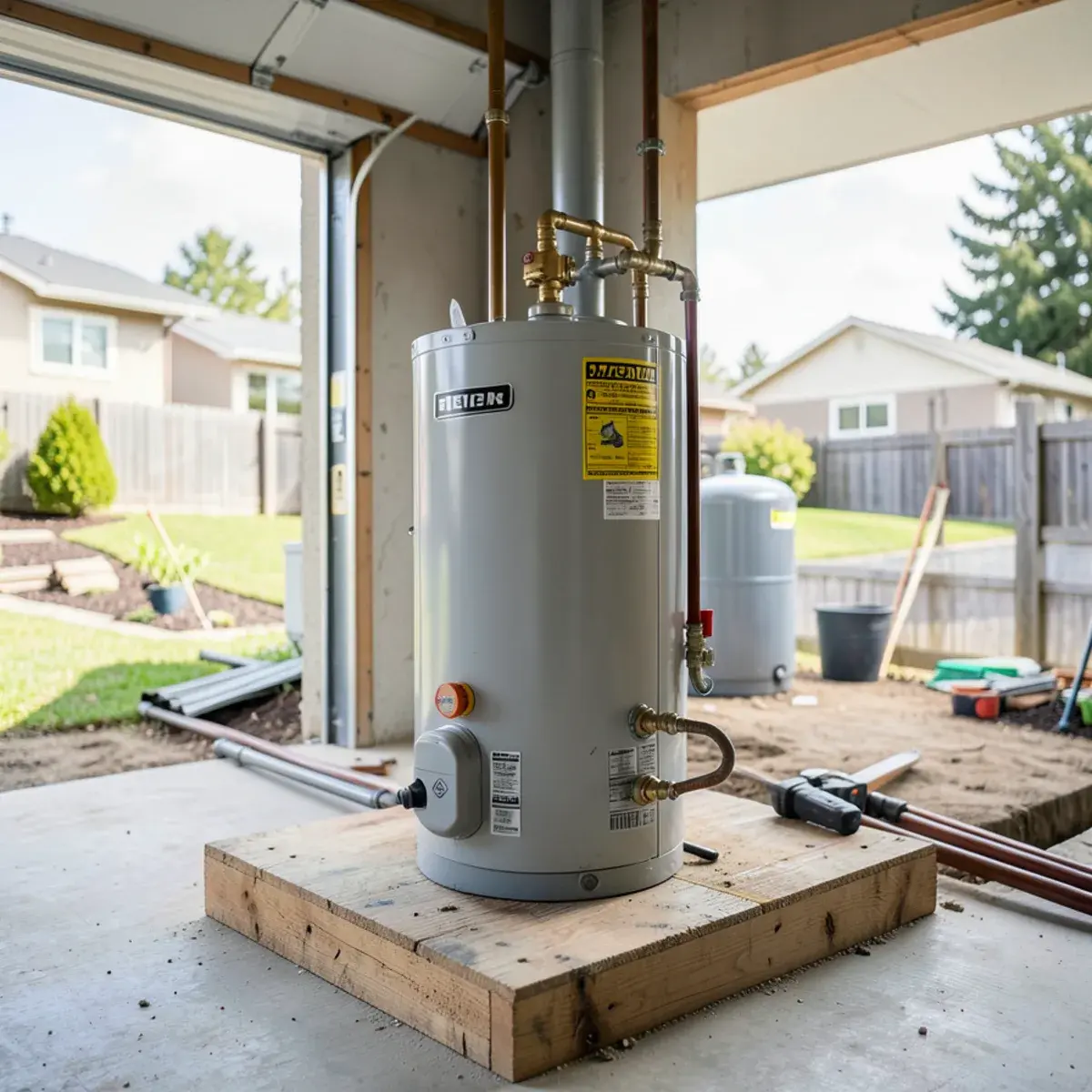
Water heater code isn't the most exciting topic — until a leak floods your garage, an inspection fails, or an insurance claim gets denied because the install wasn't permitted. In California, water heater installations are governed by the California Plumbing Code (the 2025 edition took effect January 1, 2026), the California Electrical Code, and Title 24 energy standards, and the rules are stricter than many homeowners realize. This is a plain-English guide to what California requires, why each rule exists, and what it means for a Brentwood, CA home.
The short version: a permit is required for essentially every install, and a handful of safety upgrades are mandatory. A licensed installer should handle all of it for you. Here's what "all of it" actually includes.
You Need a Permit — Every Time
This surprises people: California requires a plumbing permit for every water heater installation or replacement, including a simple like-for-like tank swap. The city or county then performs a final inspection to confirm the work meets code. Skipping the permit can cause problems when you sell the home or file an insurance claim, and it leaves safety upgrades unverified.
When you hire a licensed contractor, pulling the permit and scheduling the inspection is their job, not yours. Our installation and replacement service always includes the permit and inspection.
Seismic Strapping
California is earthquake country, so tanks must be braced. Code calls for two straps — one around the upper one-third of the tank and one around the lower one-third — with the lower strap at least 4 inches above the controls. The straps must be mechanically anchored into wall studs, not just screwed into drywall. Tankless units, which don't store water, are generally exempt because there's no heavy water-filled tank to topple.
The TPR Valve and Discharge Line
Every tank has a temperature-and-pressure-relief (TPR) valve — the most important safety device on the unit. If pressure or temperature climbs dangerously, the valve opens to vent it. Code requires a proper discharge pipe running from the valve down to terminate roughly 6–24 inches above the floor or grade, so any release is directed safely downward. A missing, capped, or improperly routed discharge line is one of the most common code violations we find. We explain the danger it prevents in Can a Water Heater Explode?.
Garage and Elevation Rules
Gas water heaters installed in a garage traditionally must have their burner or ignition source at least 18 inches above the floor, so gasoline vapors (which are heavier than air and pool low) can't be ignited. Many modern units are FVIR-listed (flammable-vapor-ignition-resistant), which can change this requirement. A code-aware installer knows which rule applies to your specific unit and location.
Drain Pans
Is a water heater pan required by code? It depends on where the heater sits. The California Plumbing Code requires a watertight, corrosion-resistant pan when the water heater is in an attic or on a floor or ceiling assembly where a leak would cause damage — think an upstairs closet, an attic platform, or a utility room over finished space. The pan must be at least 1½ inches deep and drained through a pipe at least ¾ inch in diameter to an approved location, not just left to fill up.
A tank sitting on a concrete garage slab usually doesn't need one, because a leak there runs to the garage floor and out the door rather than into a ceiling. Many installers add a pan anyway when the garage holds storage or the heater is on a raised platform; it's cheap insurance against the slow leak nobody notices for a week. If your unit is anywhere in the living space, expect a pan, and expect the inspector to check that it actually drains. Our water heater drain pan guide covers pan sizes, drain routing, and common inspection failures.
Expansion Tanks and Closed Systems
When a home has a pressure regulator or backflow preventer on the main, it becomes a "closed system" — water can't push back into the city main as it heats and expands. That trapped expansion spikes pressure and stresses the tank and plumbing. Code requires a thermal expansion tank on closed systems, and it's recommended whenever static pressure exceeds 80 PSI (a pressure regulator helps there too). We break down exactly when you need one in Do I Need an Expansion Tank?.
Gas Water Heater Code Requirements
A gas water heater has more code items than an electric one, because it burns fuel and vents exhaust. The ones inspectors look at most:
- Gas supply sized for the unit. The line has to deliver the heater's full BTU rating; ¾ inch is the usual minimum for a residential tank. A tankless conversion often needs the existing line upsized because tankless burners draw far more gas.
- An accessible shutoff valve in the same room as the heater, so it can be turned off without hunting for the main.
- A sediment trap (drip leg) at the gas inlet, which catches debris before it reaches the burner controls.
- A listed appliance connector between the valve and the heater. Flexible connectors can't run through walls, floors, or the heater's cabinet and are limited in length.
- Correct venting and combustion air. Atmospheric tanks need a vent that rises continuously to the outside with the required clearances from combustibles; power-vent and tankless units need the vent type their manufacturer lists. A closet install also needs enough combustion air, which is why some get louvered doors.
- Garage elevation or FVIR, covered above.
Electric Water Heater Electrical Requirements
Electric tanks and hybrid heat-pump units fall under the California Electrical Code, which follows the National Electrical Code:
- A dedicated circuit. The water heater can't share a circuit with anything else.
- Circuit sized to 125% of the nameplate rating. A typical 240-volt tank with 4,500-watt elements draws about 19 amps, so it ends up on a 30-amp breaker with 10-gauge copper wire. Always size from the actual nameplate, not a rule of thumb.
- A disconnect within sight, or a breaker that can be locked off, so someone working on the heater knows it can't be re-energized behind them.
Heat-pump water heaters add a few considerations: most need a 240-volt circuit like a standard electric tank, they need enough air volume around them (or ducting) to work efficiently, and they produce condensate that must be drained. Some newer models run on a standard 120-volt outlet, which can make a gas-to-electric swap possible without a panel upgrade. We check your panel capacity before recommending one. For breaker and wire sizing by element wattage, see electric water heater wiring requirements.
Pipe Insulation
Code also requires insulating the hot and cold water lines at the heater, typically the first five feet, to cut standby heat loss.
Title 24 Energy Standards
California's Title 24 sets minimum energy-efficiency requirements for water heaters. High-efficiency units — tankless and hybrid heat-pump models — meet and exceed these standards and may qualify for utility rebates. We mention rebates generally here; programs and amounts change, so confirm current figures with your utility rather than trusting a sales pitch.
Why This Matters in Brentwood
Brentwood's housing stock is relatively new, but plenty of mid-1990s-to-2000s installs predate current strapping and expansion-tank enforcement, and DIY or unpermitted swaps leave gaps. The inland heat and hard water add stress that makes code-correct TPR routing and expansion control more than a formality. Pulling a permit also creates a clean paper trail that protects you at resale and on insurance claims, as we discuss in Does Homeowners Insurance Cover Water Heater Damage?.
For the permit side specifically, including who pulls it, which office issues it in East Contra Costa, and what the inspector checks, see Do You Need a Permit to Replace a Water Heater in California?. If you're choosing between gas and electric, the Bay Area's zero-NOx water heater rule is worth reading too.
Frequently Asked Questions
Do I really need a permit to replace my water heater in California?
Yes. California requires a plumbing permit for every water heater installation or replacement, including a like-for-like tank swap, followed by a city or county inspection. A licensed contractor handles the permit and inspection for you.
What are the seismic strapping requirements?
Tanks need two straps — one around the upper third and one around the lower third of the tank, with the lower strap at least 4 inches above the controls — anchored into wall studs. Tankless units that store no water are generally exempt.
When does California code require an expansion tank?
An expansion tank is required when your home is a closed system, meaning it has a pressure regulator or backflow preventer on the main, and is recommended when static water pressure exceeds 80 PSI.
What happens if my water heater was installed without a permit?
Unpermitted work can complicate a home sale and may give an insurer grounds to question a claim, and it leaves required safety upgrades unverified. A licensed installer can install a new unit correctly and permitted, restoring a clean record.
Does code require a drain pan?
A drain pan is required for installations in attics or on floor or ceiling assemblies where a leak could cause damage. It must be at least 1½ inches deep with a drain of at least ¾ inch piped to an approved location. A tank on a concrete garage floor usually doesn't require one.
What does code require for a gas water heater?
A properly sized gas line, an accessible shutoff valve in the same room, a sediment trap at the inlet, a listed connector, correct venting with adequate combustion air, and in a garage either an 18-inch burner elevation or an FVIR-listed unit. Seismic straps, a TPR discharge line, and a permit apply as with any tank.
What are the electrical requirements for an electric water heater?
An electric water heater needs its own dedicated circuit sized to at least 125% of the nameplate rating, typically a 30-amp, 240-volt circuit with 10-gauge copper for a standard 4,500-watt tank, plus a disconnect within sight of the heater or a lockable breaker.
Need help from a licensed Brentwood plumber?
We provide free on-site assessments and upfront quotes — and we pull the permit and handle the city inspection for you.