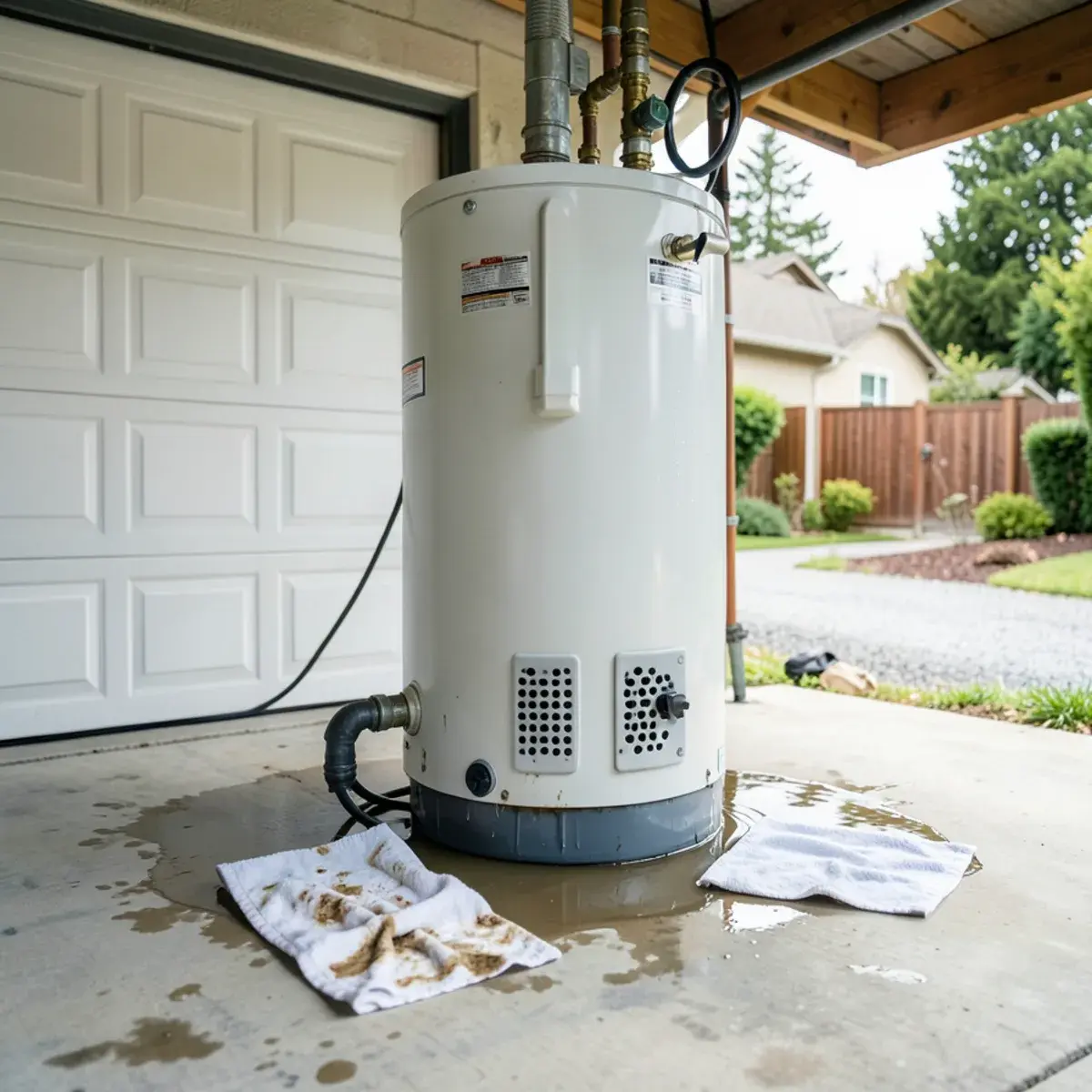
A leaking water heater ranges from a minor annoyance to an emergency that can flood a room in hours. The good news: some leaks are simple, inexpensive fixes. The bad news: a leak from the tank body itself means replacement. This guide helps you tell the difference and shows you what to do right now to limit the damage.
First: Take These Steps Now
If you see water pooling, act before you diagnose:
- Shut off the power. For an electric unit, switch off its breaker. For a gas unit, turn the gas control to "off."
- Shut off the water. Turn the cold-water supply valve on top of the heater clockwise. If it won't budge, use your home's main shutoff.
- Contain and document. Mop up standing water and photograph everything for insurance — see Does Homeowners Insurance Cover Water Heater Damage?.
- Call for help. A persistent or fast leak is an emergency — we offer 24/7 same-day service across Brentwood.
Common Causes of a Leaking Water Heater
The TPR valve
The temperature-and-pressure-relief valve discharges water when pressure climbs too high — sometimes a sign of a pressure or expansion-tank issue, sometimes a worn valve. A TPR valve replacement is a straightforward repair.
The drain valve
The valve at the base can drip if it isn't fully closed or its washer has worn. Often an easy fix.
Loose connections
The hot and cold supply fittings on top can loosen over time and weep. Tightening or resealing usually solves it.
The tank itself
If water is seeping from the body of the tank, internal corrosion has won. This cannot be repaired — the unit needs replacement. Hard water accelerates this in Brentwood homes, which is why anode rod maintenance matters.
Repairable vs. Not
Leaks from the TPR valve, drain valve, or connections are typically repairable. A leak from the tank body is not — and the longer a corroded tank runs, the higher the flood risk. When in doubt, get it looked at fast.
How to Prevent the Next Leak
Many water heater leaks are the end stage of problems that built quietly for years, which means they're largely preventable. Annual flushing clears the sediment that accelerates internal corrosion, and replacing the anode rod before it's used up keeps the tank itself protected — in Brentwood's hard water, that's the single highest-leverage thing you can do to delay tank failure. Checking the TPR valve and, on a closed system, maintaining the expansion tank keeps pressure from stressing fittings and seals.
It also pays to know your shutoffs before you need them. Locate the cold-water valve on top of the heater and your home's main shutoff today, so that if a leak does start, you can stop it in seconds rather than minutes. A few dollars of annual maintenance is cheap insurance against a flooded garage.
If the tank itself is sound, our guide to repairing vs. replacing a water heater helps you decide what comes next.
Frequently Asked Questions
Is a leaking water heater an emergency?
A fast or growing leak is an emergency because it can cause significant water damage and may indicate tank failure. Shut off the power and water and call for same-day service. A slow drip from a valve is less urgent but should still be addressed promptly.
Can a leaking water heater be repaired?
It depends on the source. Leaks from the TPR valve, drain valve, or supply connections are usually repairable. A leak coming from the tank body itself means the tank has corroded through and the unit must be replaced.
Why is water dripping from my TPR valve?
The TPR valve releases water when pressure or temperature gets too high. It can indicate excessive pressure (often a closed-system or expansion-tank issue) or simply a worn valve that needs replacing.
How do I stop a water heater leak quickly?
Turn off the unit's power (breaker or gas control), close the cold-water supply valve on top of the heater, and if needed shut off your home's main water. Then call a licensed plumber to diagnose and repair the source.
Need help from a licensed Brentwood plumber?
We provide free on-site assessments and upfront quotes — and we pull the permit and handle the city inspection for you.