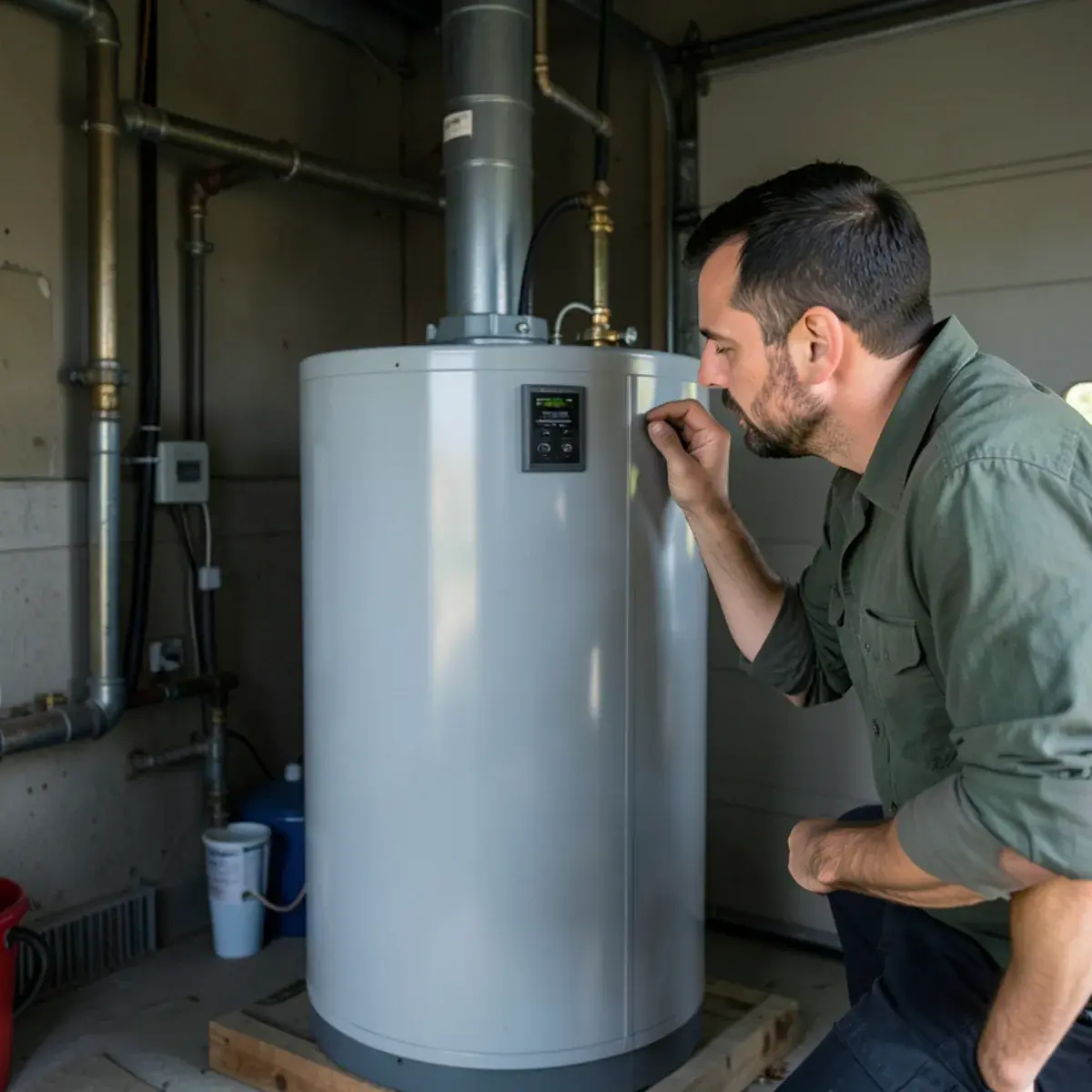
A water heater that pops, rumbles, or ticks isn't necessarily broken — but it is trying to tell you something. Most water heater noises trace back to one culprit that's especially common in Brentwood: hard-water sediment. Here's how to decode the sounds and know when it's routine versus a real problem.
Popping and Rumbling: Sediment
The most common noises — popping, crackling, or a low rumble — come from sediment on the tank bottom. Water gets trapped beneath the mineral layer, then boils and forces its way up through it, making that percussive sound. It also means the burner or element is working through an insulating crust, wasting energy.
The fix: an annual flush to clear the sediment. In hard-water Brentwood this is routine maintenance, and our How to Flush a Water Heater guide walks through it. If the noise persists after flushing, the buildup may be hardened in place — a sign of an aging tank.
Ticking or Tapping
Light ticking is often just heat traps or the metal expanding and contracting as temperatures change — usually harmless. Pipe straps and the expansion of fittings can also tick. If it's mild and intermittent, it's typically nothing to worry about.
Screeching or Whistling
A high-pitched sound usually points to a partially closed valve restricting flow — check that the inlet valve is fully open. Persistent whistling around the TPR valve warrants a look, as it can relate to pressure.
Hammering or Banging in Pipes
A bang when a tap shuts off is "water hammer," a plumbing-pressure issue rather than the heater itself. It can stress the system over time and sometimes relates to pressure that an expansion tank or pressure regulator addresses.
When to Call a Pro
If flushing doesn't quiet a rumbling tank, you hear noises alongside discolored water or reduced hot-water output, or the sounds are new and loud, have it inspected. Persistent noise on an older unit often signals it's time to consider replacement.
How to Prevent Water Heater Noise
Most water heater noise is preventable, and the prevention is the same routine maintenance that extends the unit's life. An annual flush keeps sediment from ever building into the hardened layer that pops and rumbles, and in Brentwood's hard water that yearly cadence is the floor, not a maximum. Pairing the heater with a water softener slows sediment and scale dramatically, so the tank stays quieter for longer between services.
Keeping the temperature at a sensible 120°F also helps — running the tank hotter accelerates mineral precipitation, which is what feeds the noise. And catching it early matters: a tank flushed at the first hint of rumbling usually goes quiet again, while one left for years often stays noisy because the deposits have fused to the bottom. If you're already hearing it, a flush now is the cheapest move you can make.
Noise plus weak or no hot water? Our no hot water checklist covers the next steps.
Frequently Asked Questions
Why is my water heater making a popping noise?
Popping and rumbling are almost always caused by sediment on the tank bottom. Water trapped beneath the mineral layer boils and escapes, creating the sound. An annual flush usually resolves it.
Is a noisy water heater dangerous?
Most noises, especially sediment popping, aren't immediately dangerous but signal lost efficiency and a shorter tank life. Screeching from a restricted valve or noises paired with leaks or discolored water should be checked promptly.
Will flushing my water heater stop the noise?
Often yes — flushing removes the sediment causing popping and rumbling. If the buildup has hardened or the tank is old, the noise may persist, indicating the unit is nearing the end of its life.
What does ticking from a water heater mean?
Light ticking is usually harmless, caused by heat traps or metal expanding and contracting with temperature changes. If it's loud or accompanied by other symptoms, have it inspected.
Need help from a licensed Brentwood plumber?
We provide free on-site assessments and upfront quotes — and we pull the permit and handle the city inspection for you.