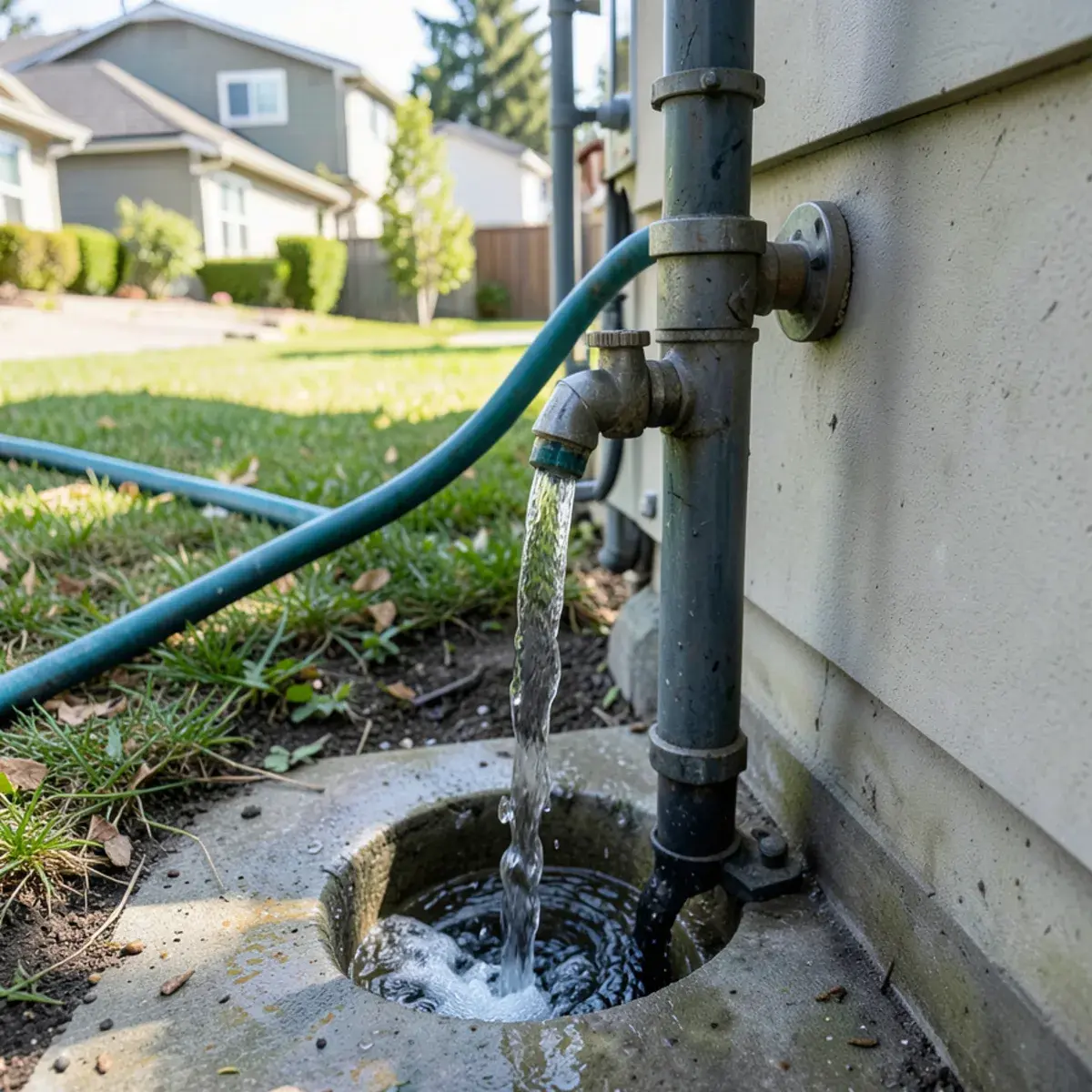
Flushing your water heater is the single most valuable maintenance task you can do — and in Brentwood, with our hard water, it matters more than almost anywhere. Sediment builds up faster here, and left alone it steals efficiency, causes that telltale rumbling, and shortens your tank's life. Here's how to flush a water heater and how often you should.
Why Flushing Matters
As water heats, dissolved minerals settle as sediment on the tank bottom. That layer insulates the water from the burner or element, forcing the unit to work harder (higher bills), trapping pockets of water that boil and "pop" (the noise you may hear), and accelerating corrosion. Flushing clears it out. The payoff is a quieter, more efficient, longer-lived tank.
How Often to Flush
The standard advice is once a year. In hard-water areas like Brentwood, annual is the floor — some homes benefit from every six months. If you've never flushed your unit and it's a few years old, get it done now and then settle into a yearly rhythm. Pairing a flush with a water softener dramatically slows sediment return.
How to Flush a Tank Water Heater
- Turn it off. Gas to "pilot" or "off"; electric breaker off. Let the water cool.
- Shut the cold supply valve on top of the tank.
- Connect a hose to the drain valve at the base and run it to a floor drain or outside.
- Open a hot tap somewhere in the house to break the vacuum.
- Open the drain valve and let the tank empty, watching for sediment in the runoff.
- Flush with fresh water: briefly reopen the cold supply to stir and rinse remaining sediment until it runs clear.
- Close the drain, refill, and only then restore power or relight per the manufacturer's instructions.
If the drain valve clogs with hardened sediment or won't reseal, or your water still runs dirty, that's a sign of heavy buildup — call for a professional flush and sediment removal.
Tankless Units Are Different
Tankless heaters aren't flushed — they're descaled with a circulation pump and a cleaning solution. See How to Descale a Tankless Water Heater.
When the Drain Valve Won't Cooperate
The most common snag homeowners hit is a drain valve that clogs with hardened sediment partway through, or won't reseal afterward and starts dripping. If the flow slows to a trickle, the sediment has packed against the valve — gently opening and closing it, or briefly surging the cold supply, can break it loose. If the cheap plastic valve many tanks ship with won't seat again after flushing, it may need replacing with a brass valve.
These are signs of heavy buildup, which is exactly what years of skipped flushing produce in Brentwood's hard water. If your runoff stays brown no matter how long you flush, or the tank still rumbles afterward, the deposits have likely fused to the bottom and a DIY flush won't fully clear them. That's the point to call for a professional flush and sediment removal, and to start flushing yearly so it never gets that bad again.
Frequently Asked Questions
How often should I flush my water heater?
At least once a year, and in hard-water areas like Brentwood, every six to twelve months. Regular flushing removes the sediment that reduces efficiency and shortens tank life.
Can I flush a water heater myself?
Yes, many homeowners can with basic tools — turn off the unit, connect a hose to the drain valve, open a hot tap, and drain the tank. If the drain valve is stuck, the runoff stays dirty, or you're uncomfortable with the gas or electrical steps, call a professional.
What happens if I never flush my water heater?
Sediment accumulates, insulating the heating surface, which raises energy bills, causes rumbling noises, reduces hot-water capacity, and accelerates tank corrosion — shortening the unit's lifespan.
Do tankless water heaters need flushing too?
Tankless units are descaled rather than flushed. A circulation pump runs a descaling solution through the heat exchanger to dissolve mineral scale, typically once a year in hard-water areas.
Need help from a licensed Brentwood plumber?
We provide free on-site assessments and upfront quotes — and we pull the permit and handle the city inspection for you.