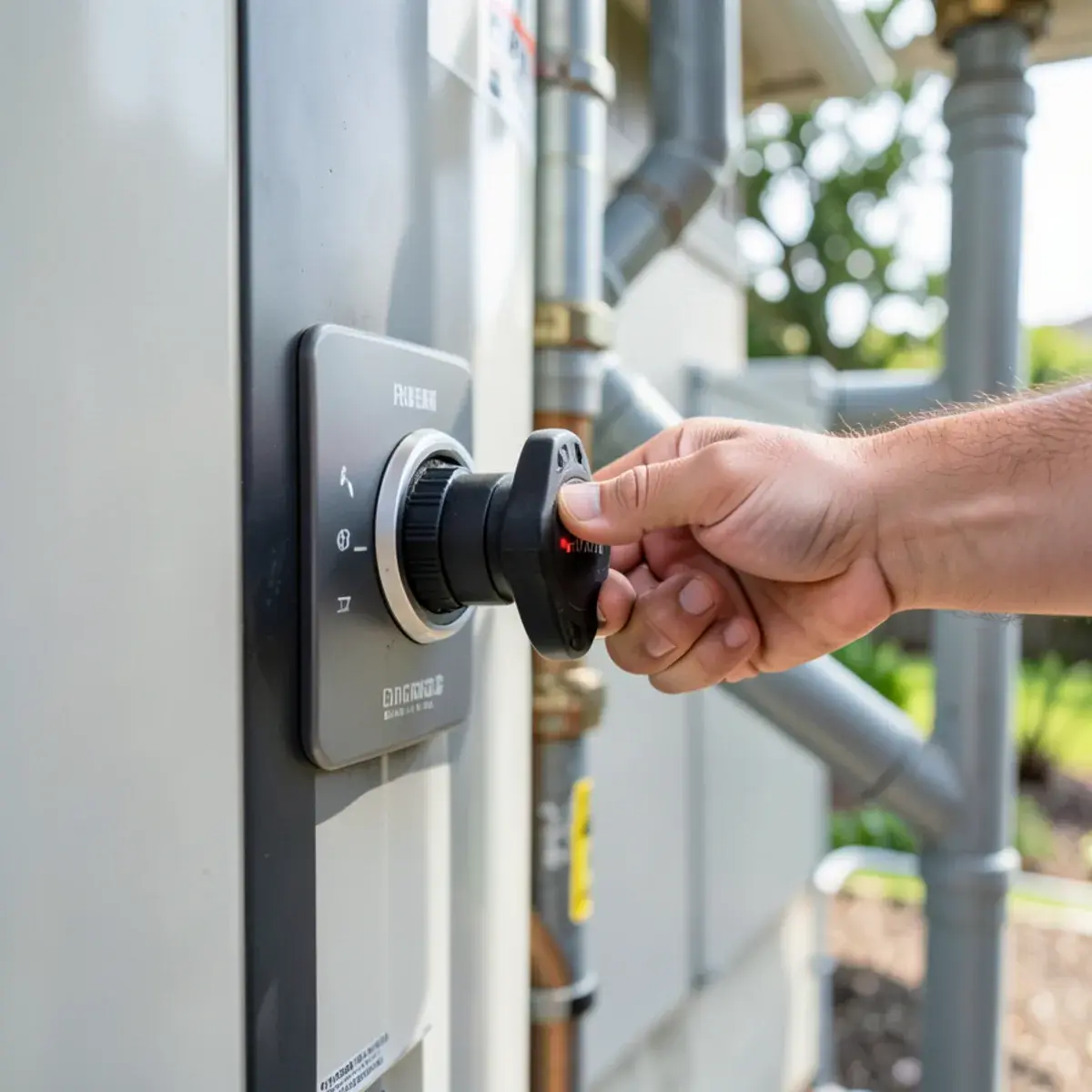
The temperature dial on your water heater is one of the few settings you can adjust yourself — and getting it right balances scald safety, energy savings, and bacteria control. So what's the magic number? For most homes it's 120°F. Here's why, and when you might deviate.
The Recommended Setting: 120°F
Most manufacturers and safety experts recommend setting a water heater to 120°F. At this temperature you get comfortable hot water while sharply reducing scald risk and keeping energy use in check. Many units ship set higher — sometimes 140°F — so it's worth checking yours.
Why Not Higher?
Every 10°F you lower the setting cuts standby energy loss, so dropping from 140°F to 120°F trims your bill. Just as important, hotter water scalds faster: at 140°F, a serious burn can happen in seconds, which is a real concern in homes with children or older adults. Lower water temperature is also gentler on the tank and reduces mineral scaling — relevant given Brentwood's hard water.
Why Not Lower?
Going much below 120°F risks letting Legionella and other bacteria grow in the stored water. 120°F is the widely recommended floor for that reason. If anyone in your home is immunocompromised, some experts suggest storing hotter and installing a mixing valve to deliver safe temperatures at the tap — worth a conversation during maintenance.
How to Adjust It Safely
On a gas unit, the dial is on the gas control valve near the base. On an electric unit, you may need to remove an access panel and adjust a thermostat behind insulation — turn off the breaker first. Make small changes, wait a few hours, and test at a tap with a thermometer. If your unit struggles to hold temperature or won't adjust, that points to a thermostat or element (electric) or pilot/thermocouple (gas) issue.
Scald Risk vs. Energy: Why 120°F Is the Sweet Spot
The reason 120°F gets recommended so consistently is that scald time drops dramatically as temperature climbs. At 120°F it takes minutes of exposure for a serious burn; at 140°F it can happen in seconds, and at 150°F almost instantly. For households with young children or older adults, that difference is the whole argument. On the energy side, water stored hotter than you need loses more heat to the surrounding air around the clock, so every few degrees you trim shows up on the bill. Setting the tank to 120°F threads the needle — hot enough to suppress bacteria and run your dishwasher, cool enough to be safe and economical.
If someone in your home needs hotter stored water for medical reasons, the safe approach is to store hot and install a thermostatic mixing valve that blends it down to a safe temperature at the taps. That's a quick add during a maintenance visit, and it lets you have it both ways.
Frequently Asked Questions
What temperature should a water heater be set at?
120°F is the recommended setting for most homes. It provides comfortable hot water while reducing scald risk, limiting bacteria growth, and keeping energy use efficient.
Is 140°F too hot for a water heater?
140°F increases the risk of serious scald burns, which can occur in seconds, and uses more energy. Most homes are safer and more efficient at 120°F unless there's a specific medical reason to store hotter water with a mixing valve.
Will lowering my water heater temperature save money?
Yes. Reducing the setting cuts standby heat loss, and dropping from 140°F to 120°F can produce noticeable energy savings while still delivering comfortable hot water.
My water heater won't reach the set temperature — why?
On electric units this usually points to a failing heating element or thermostat; on gas units it can be a pilot, thermocouple, or burner issue. Sediment buildup also reduces effective heating, so a flush may help.
Need help from a licensed Brentwood plumber?
We provide free on-site assessments and upfront quotes — and we pull the permit and handle the city inspection for you.