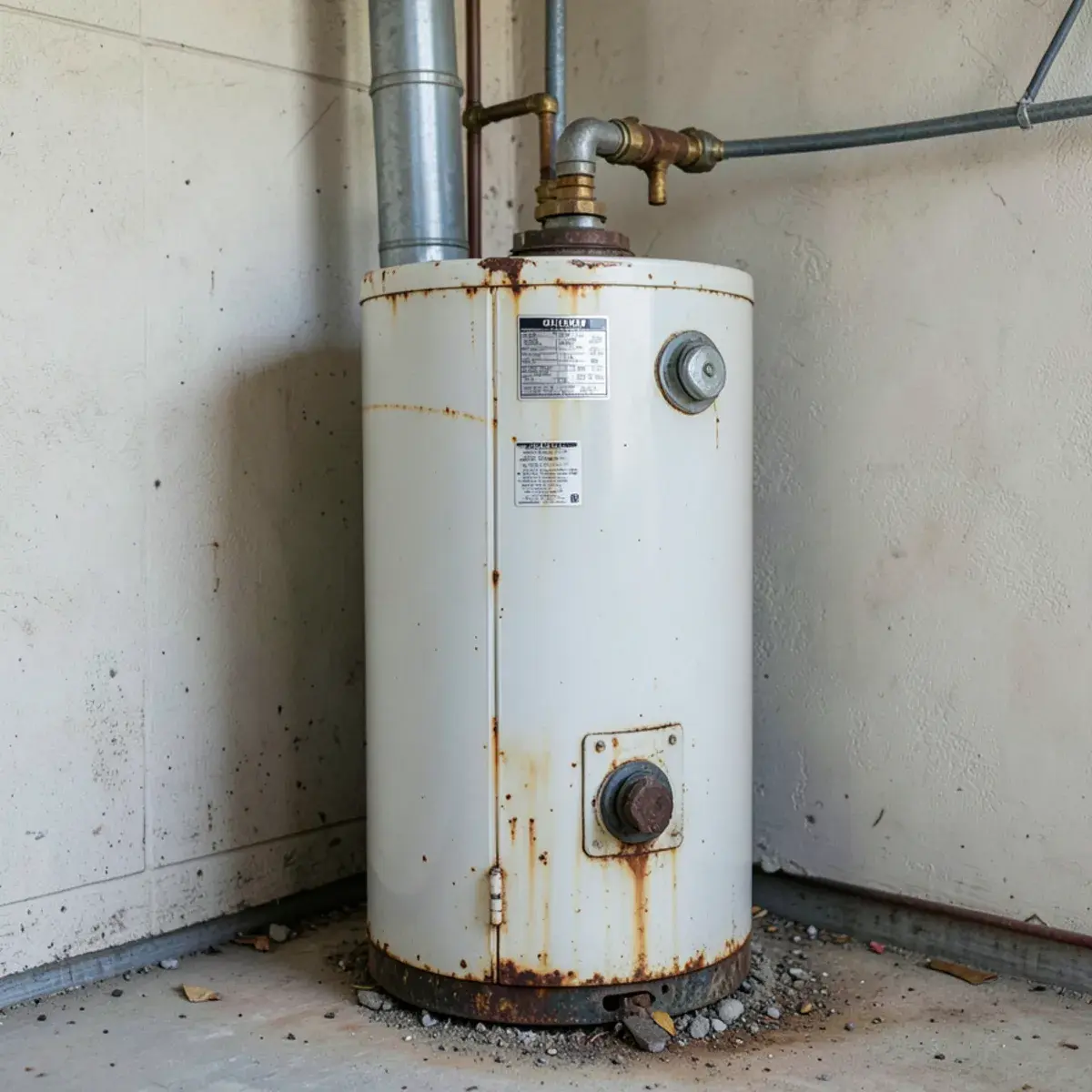
A water heater is easy to forget about — until the morning it gives you a cold shower or, worse, a flooded garage floor. Knowing how long a water heater lasts, and learning to read the warning signs, lets you replace it on your terms instead of in an emergency. Here's what to expect and the eight signs it's time to plan a replacement.
Typical Water Heater Lifespan
A conventional tank water heater generally lasts 8 to 12 years. A tankless unit can run 18 to 20 years or more with regular maintenance. Those are averages — water quality, maintenance history, and usage all move the number. In Brentwood, hard water tends to push tank units toward the shorter end of that range unless they're flushed annually and the anode rod is maintained.
8 Signs You Need a Replacement
1. Age past 10 years
If your tank is over a decade old, it's living on borrowed time. Check the serial number on the label to find the manufacture date.
2. Rusty or discolored hot water
Brown or metallic-tinted hot water often means the tank is corroding from the inside.
3. Rumbling or popping noises
Sediment hardening on the tank bottom causes these sounds. A flush may help early on, but persistent noise signals an aging tank — more in Why Is My Water Heater Making Noise?.
4. Water pooling at the base
A leak from the tank body itself is not repairable. See Why Is My Water Heater Leaking? for what's fixable and what isn't.
5. Running out of hot water faster
Sediment reduces capacity over time, so showers go cold sooner than they used to.
6. Higher energy bills
A failing unit works harder to heat the same water, quietly raising your bills.
7. Frequent repairs
When you're calling for repair repeatedly, replacement is usually the better spend.
8. Corrosion around fittings or the TPR valve
Visible rust at connections points to deterioration that won't reverse.
Repair or Replace?
A unit under eight years old with a single failed component is usually worth repairing. Once it's over 10–12 years, leaking from the tank, or the repair cost approaches half of a new unit, replacement is the smart move. Replacing proactively also lets you right-size the unit and consider an efficient tankless or hybrid upgrade.
How to Make Your Water Heater Last Longer
Lifespan isn't fixed — maintenance moves it by years. The highest-leverage habits, especially in Brentwood's hard water, are an annual flush to clear sediment and replacing the anode rod before it's used up, since that sacrificial rod is what stands between corrosion and your tank. Keeping the temperature at a sensible 120°F slows mineral precipitation and reduces stress on the tank, and maintaining a working expansion tank on a closed system prevents pressure spikes that fatigue fittings and seams.
A whole-house water softener is the bigger structural fix — by reducing hardness at the source, it slows the sediment and scale that age every water-using appliance in the home, not just the heater. None of this is expensive relative to a premature replacement, which is the whole point: a little routine maintenance is what separates a tank that dies at eight years from one that's still going strong at twelve.
Not sure whether yours is worth fixing? Our guide to repairing vs. replacing a water heater walks through the decision.
Frequently Asked Questions
How long does a water heater last on average?
Conventional tank units typically last 8 to 12 years, while tankless units can last 18 to 20 years or more with regular maintenance. Brentwood's hard water can shorten tank lifespan without annual flushing.
Can maintenance extend my water heater's life?
Yes. Annual flushing to remove sediment, periodic anode rod replacement, and checking the TPR valve all meaningfully extend a tank's life. Tankless units benefit from annual descaling.
Is it worth repairing a 10-year-old water heater?
Usually not, if the repair is significant. Once a tank reaches 10–12 years, repairs tend to be a temporary fix on a unit nearing the end of its life, so replacement is generally the better value.
How do I find out how old my water heater is?
Check the manufacturer's label for a serial number; the date is often encoded in it. If you can't decode it, we can identify the age during a free assessment.
Need help from a licensed Brentwood plumber?
We provide free on-site assessments and upfront quotes — and we pull the permit and handle the city inspection for you.