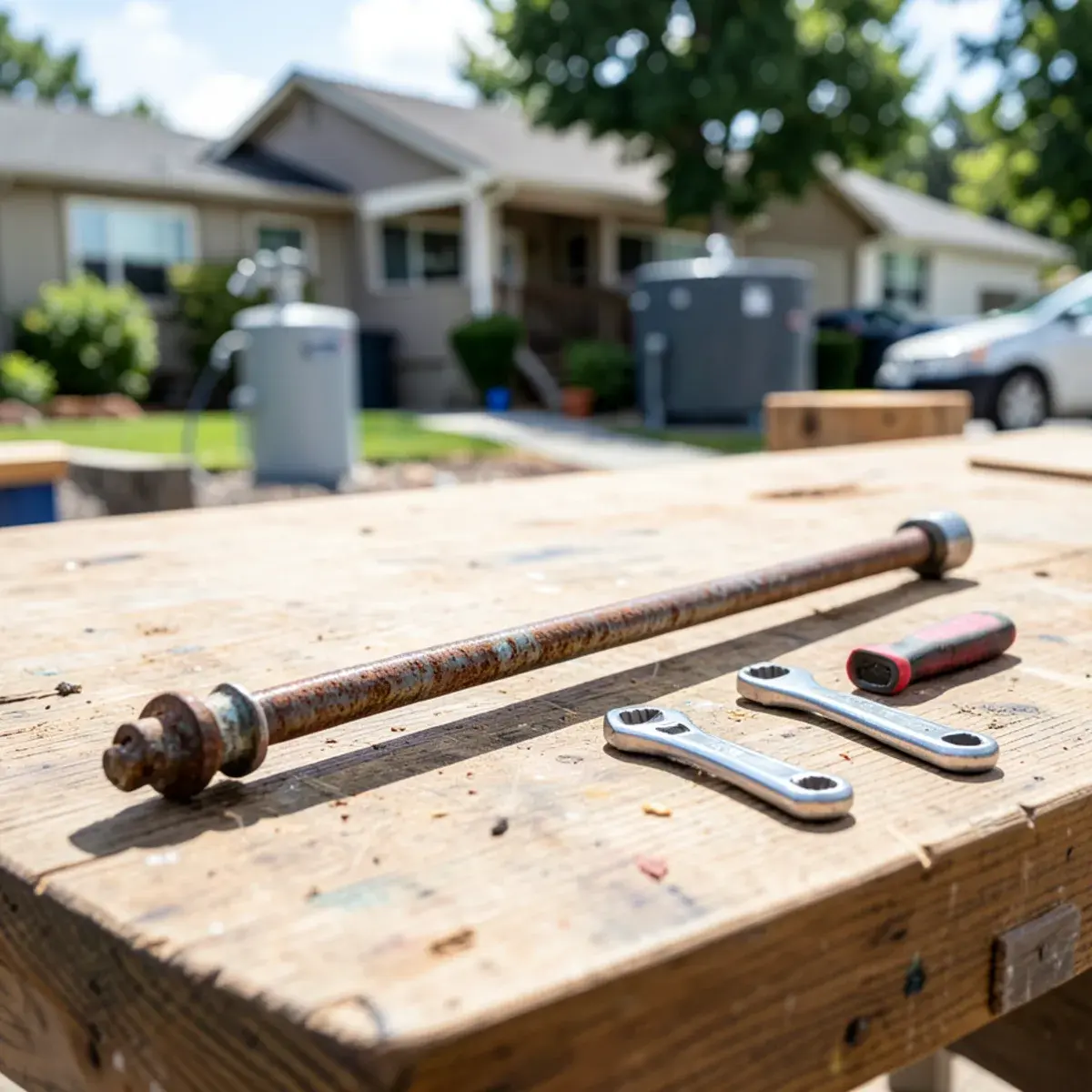
Inside your water heater is a part most homeowners have never heard of that quietly determines how long the tank lasts. It's called the anode rod, it costs little to replace, and ignoring it is the most common reason tanks rust out years early. In Brentwood's hard water, it's the cheapest insurance you can buy for your water heater.
What an Anode Rod Does
An anode rod is a metal rod (usually magnesium or aluminum) that screws into the top of the tank and hangs down inside it. Through a process called galvanic corrosion, the rod is designed to corrode instead of your steel tank — which is why it's nicknamed the "sacrificial" rod. As long as there's rod left to corrode, the tank itself is protected. Once the rod is used up, corrosion turns on the tank, and that's when leaks begin.
Why It Matters So Much in Brentwood
Hard water accelerates corrosion, so the anode rod sacrifices itself faster here than in soft-water regions. A rod that might last five-plus years elsewhere can be consumed sooner in Brentwood. The homeowners who replace their rod on schedule routinely get years more life out of the same tank than those who never touch it — it can effectively double a tank's lifespan.
When to Replace It
A good rule is to inspect the anode rod every 2–3 years and replace it when it's significantly corroded — when the steel core wire is exposed along much of its length, or it's eaten down to a thin wire. Homes with water softeners may actually consume rods faster, so check sooner. We inspect and swap the rod as part of annual maintenance, or as a standalone anode rod replacement.
A Smart Companion to Other Maintenance
Anode rod care pairs naturally with an annual sediment flush — together they're the one-two punch that maximizes tank life. If your water has a faint rotten-egg smell, that can relate to the rod's reaction with certain water chemistry, and switching rod types sometimes resolves it. If your tank is already leaking from the body, though, the rod won't save it — at that point it's time for replacement.
The Three Types of Anode Rod
Not all anode rods are the same, and the right one depends on your water. Magnesium rods are the most common and offer strong protection, but they corrode faster in hard water and can react with certain water chemistry to produce a rotten-egg sulfur smell. Aluminum (often aluminum-zinc) rods last longer in hard water and frequently solve that sulfur-smell problem, which is why they're a common swap in Brentwood homes. Powered (impressed-current) rods use a small electrical charge instead of sacrificing metal — they never wear out and are a good option for persistent odor issues, though they cost more up front.
If your hot water has developed an eggy smell, switching rod type is usually the fix rather than just replacing like-for-like. We'll assess your water and recommend the rod that gives the longest tank protection for your situation as part of an anode rod replacement or annual maintenance.
Hard water also wears out water softeners over time; here's when to replace a water softener.
Frequently Asked Questions
What does a water heater anode rod do?
It's a sacrificial metal rod that corrodes in place of the steel tank, protecting it from rust. As long as rod material remains, the tank is shielded; once the rod is depleted, the tank begins to corrode and eventually leaks.
How often should I replace the anode rod?
Inspect it every two to three years and replace it when it's heavily corroded or eaten down to a thin wire. In hard-water areas like Brentwood, and in homes with water softeners, rods can wear out faster, so check sooner.
Can replacing the anode rod really extend my water heater's life?
Yes. Keeping a functional anode rod is one of the most effective ways to prolong tank life — combined with annual flushing, it can significantly delay the corrosion that leads to tank failure.
Why does my hot water smell like rotten eggs?
That sulfur smell can result from a reaction between the anode rod and certain water chemistry or bacteria. Switching to a different rod material (such as aluminum-zinc) often resolves it; we can assess and recommend the right rod.
Need help from a licensed Brentwood plumber?
We provide free on-site assessments and upfront quotes — and we pull the permit and handle the city inspection for you.