Electric water heaters draw a lot of power, so the electrical code is specific about how they're wired. If you're replacing an electric tank, switching from gas to electric, or adding a heat-pump water heater, here's what the California Electrical Code (which follows the National Electrical Code) requires and what it means in practice.
Safety first: water heater circuits are 240 volts. Wiring work should be done by a qualified professional with the breaker off and verified dead. This guide explains the requirements so you know what to expect; it isn't a how-to for DIY wiring.
1. A Dedicated Circuit
An electric water heater must be on its own branch circuit. Nothing else, not a dryer, outlet, or light, can share it. Most standard electric tanks run on 240 volts.
2. The Circuit Sized at 125% of the Nameplate
For a storage water heater (120 gallons or less), the code treats it as a continuous load, so the circuit must be rated for at least 125% of the heater's nameplate current. Here's how that works for common sizes:
| Element rating (240V) | Nameplate current | ×125% | Typical breaker | Typical copper wire |
|---|---|---|---|---|
| 3,500 watts | ~14.6 A | ~18.2 A | 20 A | 12 AWG |
| 4,500 watts | ~18.8 A | ~23.4 A | 25 or 30 A | 10 AWG |
| 5,500 watts | ~22.9 A | ~28.6 A | 30 A | 10 AWG |
The 4,500-watt tank is the most common residential electric water heater, and it usually ends up on a 30-amp double-pole breaker with 10-gauge copper wire. Always size from the actual nameplate on your heater, not a chart, and account for wire length and insulation type.
3. A Disconnecting Means
You must be able to shut the heater off for service. The code requires a disconnect that is either:
- Within sight of the water heater, typically a wall-mounted disconnect switch, or
- Capable of being locked in the off position, usually a breaker with a lock-off device
This keeps someone working on the heater from being shocked if the breaker is turned on behind them.
4. Proper Wiring Methods and Grounding
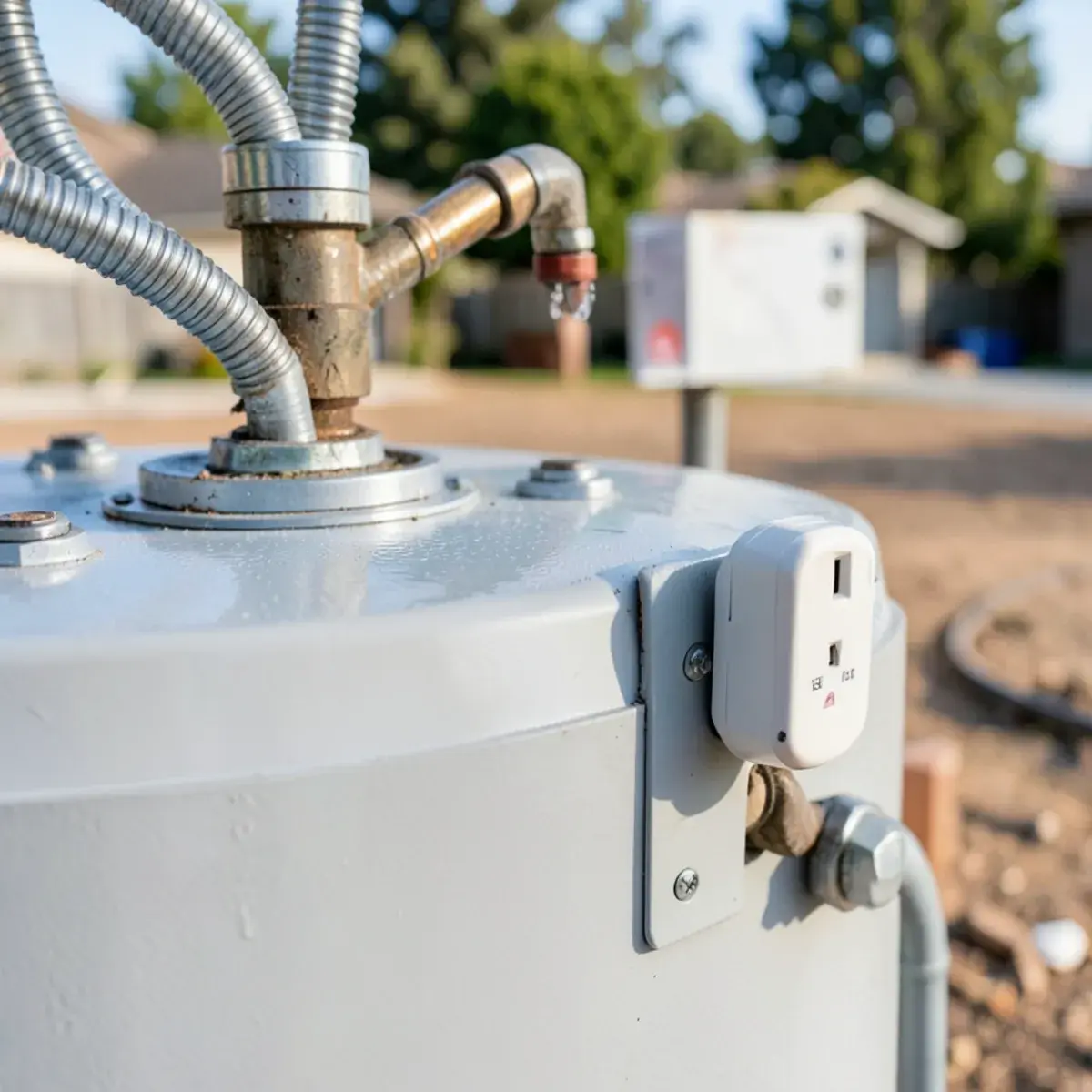
- The supply wiring must be protected where it enters the heater's junction box, usually with flexible conduit or an approved cable connector.
- The heater must be grounded with an equipment grounding conductor.
- Connections are made in the heater's junction box, with covers in place.
5. Bonding and Dissimilar Metals
Where metal water piping connects to the heater, it's part of the home's bonded water system. Dielectric unions or nipples are often used where copper meets the steel tank to limit corrosion. On homes with gas piping and CSST, bonding rules apply to the gas system as well, which is a separate requirement.
Heat-Pump Water Heaters
Hybrid heat-pump water heaters follow the same rules: dedicated circuit, sized to the nameplate, with a disconnect. A few differences:
- Most models need a 240-volt circuit, commonly 30 amps, because they include backup electric elements.
- Some newer models run on 120 volts and plug into a dedicated standard outlet, which can avoid a panel upgrade when switching from gas.
- They need a condensate drain and enough surrounding air to run efficiently.
If your panel is full or small, a load calculation tells you whether you can add a 240-volt circuit or need a 120-volt model. Our Bay Area gas water heater rules article explains why more East County homeowners are making this switch.
Switching From Gas to Electric
Moving from a gas tank to an electric or heat-pump water heater usually involves:
- A new 240-volt circuit from the panel to the water heater location, unless you choose a 120-volt heat-pump model.
- Checking panel capacity. An older or smaller panel may not have room.
- Capping the gas line properly at the old heater location.
- Removing or sealing the old flue so it doesn't leave an open path through the roof.
- A permit covering both the plumbing and the electrical work.
Common Problems We Find on Existing Electric Water Heaters
- Undersized wire for the breaker, sometimes from a previous owner's replacement
- No disconnect within sight and no lockable breaker
- Missing conduit or cable connector at the junction box
- Scorched or loose connections at the junction box or thermostat terminals
- A breaker that trips repeatedly, which usually points to a shorted element or wiring fault
A breaker that trips again after one reset is a sign to stop and call a professional. Our no hot water guide covers the safe checks you can do.
Frequently Asked Questions
What size breaker does an electric water heater need?
Size the circuit to at least 125% of the heater's nameplate current. A typical 240-volt tank with 4,500-watt elements draws about 19 amps, which works out to a 30-amp breaker with 10-gauge copper wire in most installations.
Does an electric water heater need a dedicated circuit?
Yes. It must be on its own branch circuit with nothing else connected.
Does a water heater need a disconnect switch?
It needs a disconnecting means either within sight of the heater or a breaker that can be locked in the off position.
Can a heat-pump water heater plug into a regular outlet?
Some newer models are designed for 120 volts and plug into a dedicated standard outlet. Most heat-pump water heaters still need a 240-volt circuit.
Do I need a permit to replace an electric water heater?
Yes. In California, water heater replacements need a permit and inspection, and the inspector checks the electrical connection as well as the plumbing.
Need help from a licensed Brentwood plumber?
We provide free on-site assessments and upfront quotes — and we pull the permit and handle the city inspection for you.