A tankless water heater is a great investment — but in Brentwood's hard water, it comes with one non-negotiable maintenance task: descaling. Skip it and you'll slowly lose the efficiency and endless hot water you paid for, and you may void the warranty. Here's why descaling matters here specifically, how the process works, and how often to do it.
Why Tankless Units Need Descaling
A tankless heater warms water by passing it through a heat exchanger. Hard, mineral-heavy water leaves scale deposits inside that exchanger, narrowing the passages. As scale builds, flow drops, the unit works harder, efficiency falls, and you may notice fluctuating temperatures or error codes. Descaling dissolves that buildup and restores the unit to full performance. It's the tankless equivalent of flushing a tank — but it uses a different method.
How Descaling Works
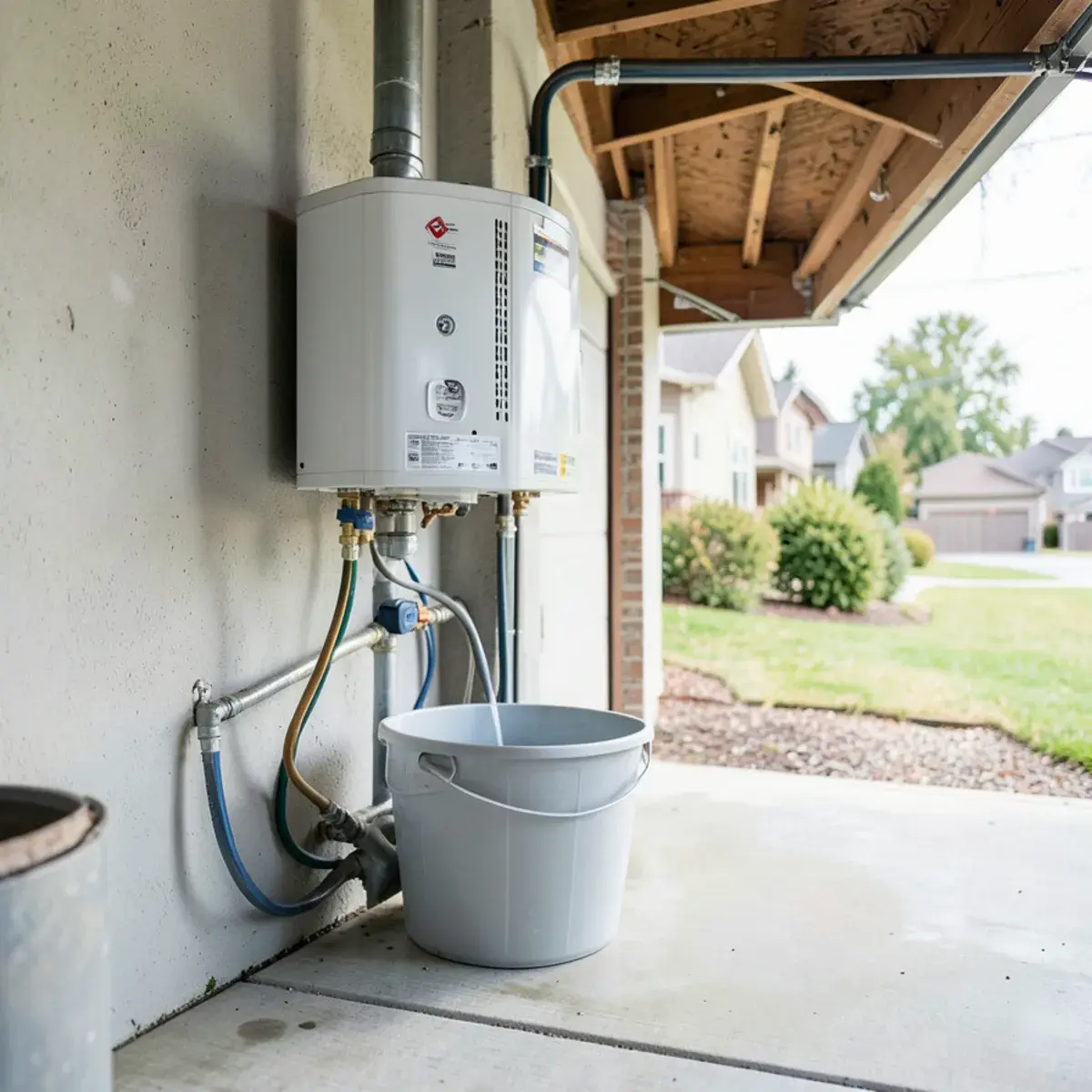
Descaling circulates a cleaning solution (typically food-grade white vinegar or a commercial descaler) through the heat exchanger for about an hour:
- Power down the unit and shut its isolation valves.
- Connect hoses to the service valves most tankless units include for exactly this purpose.
- Circulate the solution from a bucket through the unit and back using a small submersible pump, letting it run roughly 45–60 minutes to dissolve the scale.
- Flush with clean water to rinse out the solution and any loosened deposits.
- Reopen valves, restore power, and confirm normal operation.
If your unit lacks isolation/service valves, they should be added — they make every future descaling far easier. Our tankless descaling & maintenance service handles the whole process and can install service valves if needed.
How Often in Brentwood?
The general recommendation is once a year. In a hard-water area like Brentwood, annual is the minimum — and pairing the unit with a water softener slows scale dramatically, sometimes letting you stretch the interval. If you notice reduced flow, temperature swings, or scaling error codes sooner, descale sooner.
DIY or Pro?
Mechanically inclined owners with the right pump and valves can descale themselves. Many prefer to fold it into a professional annual visit that also checks the venting, gas, and overall condition — and keeps maintenance records that protect the manufacturer's warranty.
Signs Your Tankless Needs Descaling Now
You don't have to wait for the calendar to tell you. Several symptoms mean scale has already built up enough to matter: hot water that fluctuates or briefly turns cold under steady demand, a noticeable drop in flow at the tap, longer waits to reach temperature, or scale- and flow-related error codes on the unit's display. A faint rumbling or whistling from the heat exchanger is another tell.
If you're seeing any of these — especially after more than a year without service — descale sooner rather than later. Running a scaled-up unit doesn't just waste energy; sustained scale can damage the heat exchanger, the single most expensive part to replace. Catching it at the symptom stage keeps a cheap annual descaling from turning into a major repair, and it protects your manufacturer warranty in the bargain.
If descaling doesn't clear the problem, our rundown of common tankless water heater problems covers the other usual causes.
Frequently Asked Questions
How often should I descale a tankless water heater?
At least once a year in hard-water areas like East Contra Costa. A whole-house water softener can slow scale buildup and may extend the interval. Descale sooner if you notice reduced flow or temperature fluctuations.
What happens if I don't descale my tankless water heater?
Mineral scale accumulates in the heat exchanger, restricting flow, reducing efficiency, causing temperature swings or error codes, and potentially shortening the unit's life. Neglecting descaling can also void the manufacturer's warranty.
Can I descale a tankless water heater myself?
Yes, if your unit has isolation/service valves and you have a submersible pump, hoses, and descaling solution. The process circulates the solution through the heat exchanger for about an hour, then flushes with clean water. Many owners prefer a professional annual service.
What solution is used to descale a tankless unit?
Food-grade white vinegar or a commercial descaling solution is circulated through the heat exchanger to dissolve mineral scale, followed by a clean-water flush. Avoid harsh chemicals not approved for your unit.
Need help from a licensed Brentwood plumber?
We provide free on-site assessments and upfront quotes — and we pull the permit and handle the city inspection for you.