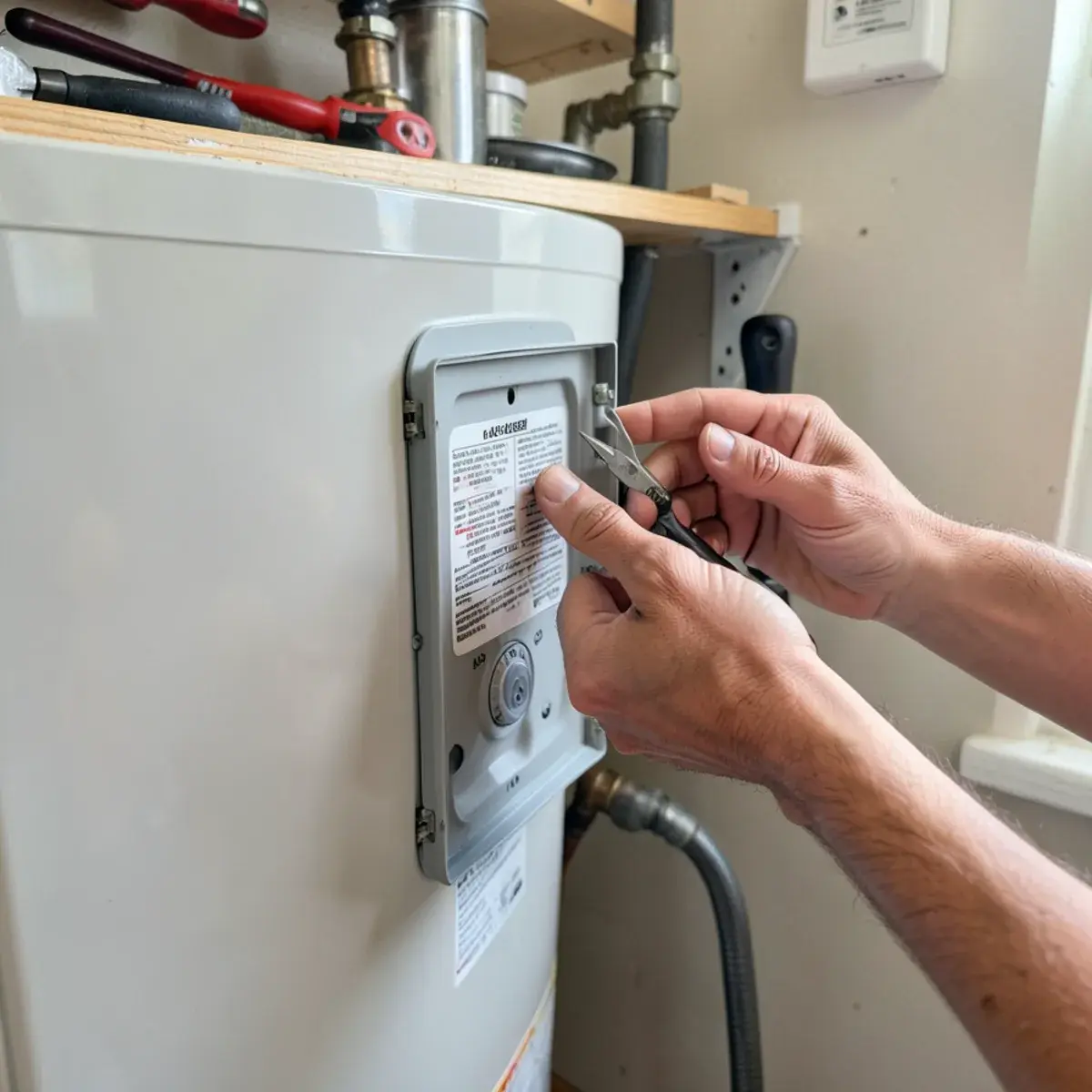
Tankless water heaters are reliable when they're sized and maintained properly, but they fail differently from tanks. Most problems show up as an error code, fluctuating temperature, or the unit shutting off while you're using hot water. In East Contra Costa, where the water is hard, a large share of those problems trace back to scale.
Here are the problems we see most often, what causes them, what you can safely check yourself, and when to call for tankless water heater repair.
1. Scale Buildup in the Heat Exchanger
Symptoms: error codes for overheating or scale, hot water that gets weaker over time, the unit shutting down during long showers, or a whining sound.
Why it happens: calcium and magnesium in hard water deposit on the inside of the heat exchanger. Scale insulates the exchanger from the water, so the unit runs hotter to keep up, and eventually its sensors shut it down to protect itself.
What to do: a descaling flush clears it. Most manufacturers recommend descaling at least once a year in hard-water areas. With isolation valves installed, it's a short job; our descaling guide explains how it works. A water softener slows scale significantly.
2. Clogged Inlet Water Filter
Symptoms: low hot-water flow, the unit not firing at low flow, or error codes related to flow.
Why it happens: tankless units have a small screen on the cold-water inlet that traps grit and scale flakes. When it clogs, not enough water reaches the burner to trigger ignition.
What to do: with the unit's water and power shut off, the screen can usually be removed and rinsed. Your owner's manual shows where it is. We clean it during every descaling service.
3. Ignition Failure
Symptoms: no hot water and an ignition-related error code, sometimes after a clicking sound.
Why it happens: a dirty or failed igniter or flame rod, low gas pressure, a closed gas valve, or air in a newly installed gas line.
What to check: make sure the gas valve to the unit is open and that other gas appliances work. Beyond that, ignition repairs involve gas components and should be handled by a technician.
4. Undersized Gas Line
Symptoms: the unit works with one fixture but fails or loses heat when two showers run, often with an ignition or flame error under high demand.
Why it happens: whole-house tankless units need far more gas than a tank. When a tank is swapped for tankless without upsizing the gas line, the unit can't get enough fuel at full output. This is one of the most common installation mistakes.
What to do: a technician can measure gas pressure at the unit while it's firing at high output. The fix is a properly sized gas line, sometimes with a meter upgrade from the utility.
5. The "Cold Water Sandwich"
Symptoms: a brief burst of cold water a few seconds after turning hot water back on, between bursts of hot.
Why it happens: when you shut the water off and turn it back on, hot water sitting in the pipe comes out first, then a slug of cold water passes through before the unit heats back up.
What to do: some of this is normal. A recirculation system or a unit with a small built-in buffer can reduce it. Severe cases can point to a flow-sensor problem.
6. Venting and Condensate Problems
Symptoms: vent or combustion error codes, the unit shutting off, or water dripping from the unit.
Why it happens: blocked vent terminations (bird nests, debris, or a dryer vent nearby), incorrect vent materials, or a blocked condensate drain on condensing units.
What to check: look at the vent termination outside for obvious blockages. Don't modify the vent yourself. Venting problems can push exhaust back into the home.
7. Minimum Flow Not Met
Symptoms: no hot water from a single faucet barely turned on, or from a low-flow fixture.
Why it happens: tankless units need a minimum flow, often around half a gallon per minute, before they fire.
What to do: open the faucet a bit more. If low-flow fixtures consistently don't trigger the unit, a technician can check the flow sensor and settings.
8. Heat Exchanger Leak
Symptoms: water inside the cabinet or dripping from the bottom, often on an older unit with a long history of scale.
Why it happens: years of scale and overheating eventually crack or corrode the heat exchanger.
What to do: on a unit 15 years or older, this usually means tankless water heater replacement. On a newer unit, check whether the heat exchanger is still under warranty.
How to Prevent Most Tankless Problems
- Descale yearly in hard-water areas, or as your manufacturer recommends.
- Install isolation valves if your unit doesn't have them, so descaling is quick.
- Clean the inlet filter at every service.
- Size the gas line and the unit correctly from the start. See tankless installation.
- Keep vent terminations clear.
Frequently Asked Questions
Why does my tankless water heater keep shutting off?
The most common causes are scale buildup that makes the unit overheat, a clogged inlet filter, an undersized gas line that can't supply enough gas at full demand, or a venting problem. The error code on the display usually narrows it down.
How often should a tankless water heater be flushed?
Most manufacturers recommend descaling at least once a year in hard-water areas like East Contra Costa. A water softener can extend that interval.
Why is my tankless water heater not getting hot enough?
Scale on the heat exchanger, too much demand for the unit's size, an undersized gas line, or a set temperature that's too low. In winter, colder incoming water also reduces how much hot water a unit can deliver.
Is it worth repairing an old tankless water heater?
Usually, if the problem is a sensor, igniter, fan, or scale. A leaking heat exchanger on an older, out-of-warranty unit generally means replacement.
Need help from a licensed Brentwood plumber?
We provide free on-site assessments and upfront quotes — and we pull the permit and handle the city inspection for you.