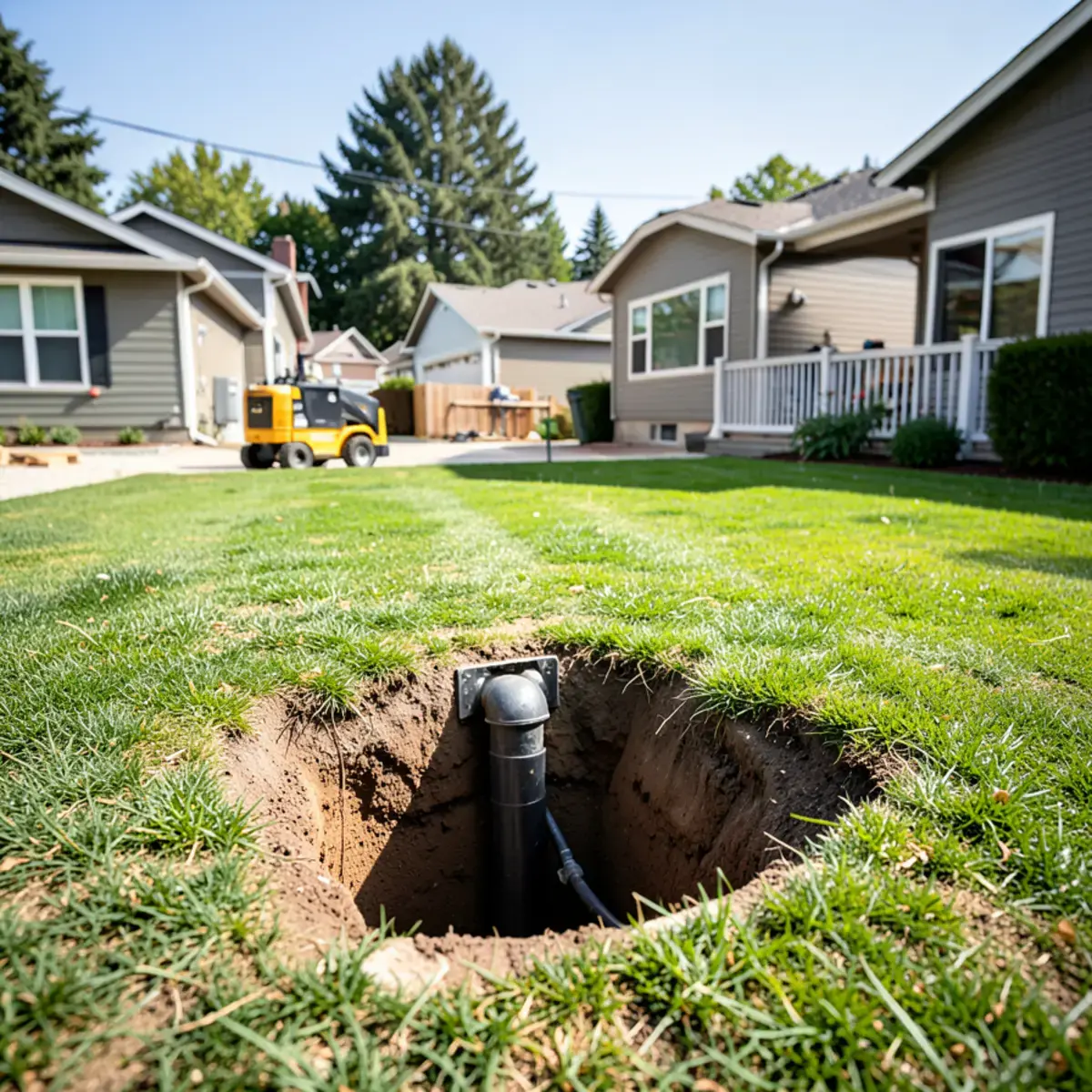
If a camera inspection shows your sewer line is cracked, root-damaged, or partly collapsed, the next question is how to fix it. The traditional approach is to dig a trench along the entire line. Trenchless methods repair or replace the pipe through one or two small access points instead. Here's how each works, when trenchless makes sense, and when digging is still the right call.
How You Know the Sewer Line Is the Problem
A single slow drain is usually a local clog. A sewer lateral problem (the line from your house to the public main) tends to show up across the house:
- Several drains slow down at once, especially lower fixtures like tubs and showers
- Gurgling from drains or toilets when another fixture runs
- Sewage backing up into a tub or floor drain
- Recurring clogs that come back weeks after drain cleaning
- Wet, lush patches or a sewage smell in the yard
The only way to know what's wrong is a camera inspection through a cleanout. It shows cracks, offset joints, root intrusion, sags (bellies), and collapses, and it locates them so the repair can be planned.
Option 1: Traditional Excavation
The crew digs a trench along the damaged section, removes the old pipe, and lays new pipe.
Best for: fully collapsed lines, severe sags where the pipe slope has to be rebuilt, very shallow or short runs, or lines with too many bends for trenchless equipment.
Downsides: disruption to lawns, landscaping, driveways, or hardscape, plus restoration afterward.
Option 2: Pipe Lining (Cured-in-Place Pipe)
A flexible liner coated in resin is inserted into the existing pipe through a cleanout, inflated against the pipe walls, and cured in place. The result is a new, jointless pipe inside the old one.
Best for: pipes that are cracked, have small holes, or have root intrusion at joints but still hold their shape.
Trade-offs: it slightly reduces the pipe's inside diameter, and the old pipe has to be intact enough to line. Roots and buildup must be cleared first.
Option 3: Pipe Bursting
A bursting head is pulled through the old pipe from one access pit to another, breaking the old pipe outward while pulling a new HDPE pipe in behind it.
Best for: pipes too damaged to line, or when you want a full replacement along the same path, often with the same or larger diameter.
Trade-offs: it needs two small pits, at the start and end, and enough soil around the pipe to absorb the fragments.
Side-by-Side
| Factor | Excavation | Pipe lining | Pipe bursting |
|---|---|---|---|
| Digging | Full trench | Usually none (cleanout access) | Two small pits |
| Handles collapsed pipe | Yes | No | Sometimes |
| Fixes sags/bellies | Yes | No | Partly |
| New pipe diameter | Any | Slightly smaller | Same or larger |
| Disruption to yard | High | Low | Low to moderate |
Things That Affect Which Method Works
- Pipe condition from the camera inspection
- Pipe material. Older clay and cast iron lines are common candidates; some materials and fittings limit options.
- Depth and length of the line
- Bends and connections between the house and the main
- What's on top: a driveway, patio, or mature trees can make trenchless much more attractive
- City requirements for the connection at the public main and for permits
East Contra Costa's expansive clay soils add another factor: ground movement can shift pipe joints and create sags over time, which is why the camera footage matters before choosing a method.
Who Is Responsible for the Sewer Lateral?
In most East County cities the homeowner is responsible for the private sewer lateral, from the house to the connection at the public main, though exact boundaries vary by city. Some cities also require lateral inspections or upgrades at certain times, like a home sale or a major remodel. Ask your city's public works department about your address.
Permits and Inspections
Sewer lateral repair and replacement generally require a permit, and work in the street or sidewalk may need an encroachment permit too. We handle permits for sewer line services and schedule the inspection.
Frequently Asked Questions
What is trenchless sewer repair?
It's a set of methods, mainly pipe lining and pipe bursting, that repair or replace a sewer line through a cleanout or small access pits instead of digging a trench along the entire line.
Is trenchless sewer repair always possible?
No. Fully collapsed pipes, severe sags, and lines with many bends may still need excavation. A camera inspection shows which methods will work.
How long does trenchless sewer repair take?
Many residential trenchless repairs are finished in a day or two, depending on the method, the length of the line, and permit and inspection timing.
Do tree roots come back after pipe lining?
Lining creates a jointless pipe, which removes the joints roots typically enter through, so it greatly reduces root intrusion in the lined section.
Do I need a camera inspection first?
Yes. It's the only way to see the pipe's condition and choose the right repair, and it locates the problem so only the necessary work is done.
Need help from a licensed Brentwood plumber?
We provide free on-site assessments and upfront quotes — and we pull the permit and handle the city inspection for you.