Hybrid heat-pump water heaters are the most efficient water heaters you can buy — and California has been actively pushing homeowners toward them with rebate and incentive programs. If you're replacing a unit and have the right space, a heat-pump model deserves a serious look. Here's how they work, why they save so much, and how California incentives can offset the higher upfront cost.
How a Heat-Pump Water Heater Works
Instead of generating heat directly, a hybrid heat-pump water heater moves heat — pulling warmth from the surrounding air and transferring it into the water, like a refrigerator running in reverse. Because moving heat takes far less energy than creating it, these units can be roughly two to three times as efficient as a standard electric tank.
Why They're So Efficient
A conventional electric tank converts electricity straight to heat at best 1:1. A heat pump multiplies that by harvesting ambient heat, so the same hot water costs a fraction of the energy. That efficiency is exactly why California's Title 24 energy standards and state climate programs favor them.
The Catch: Space and Location
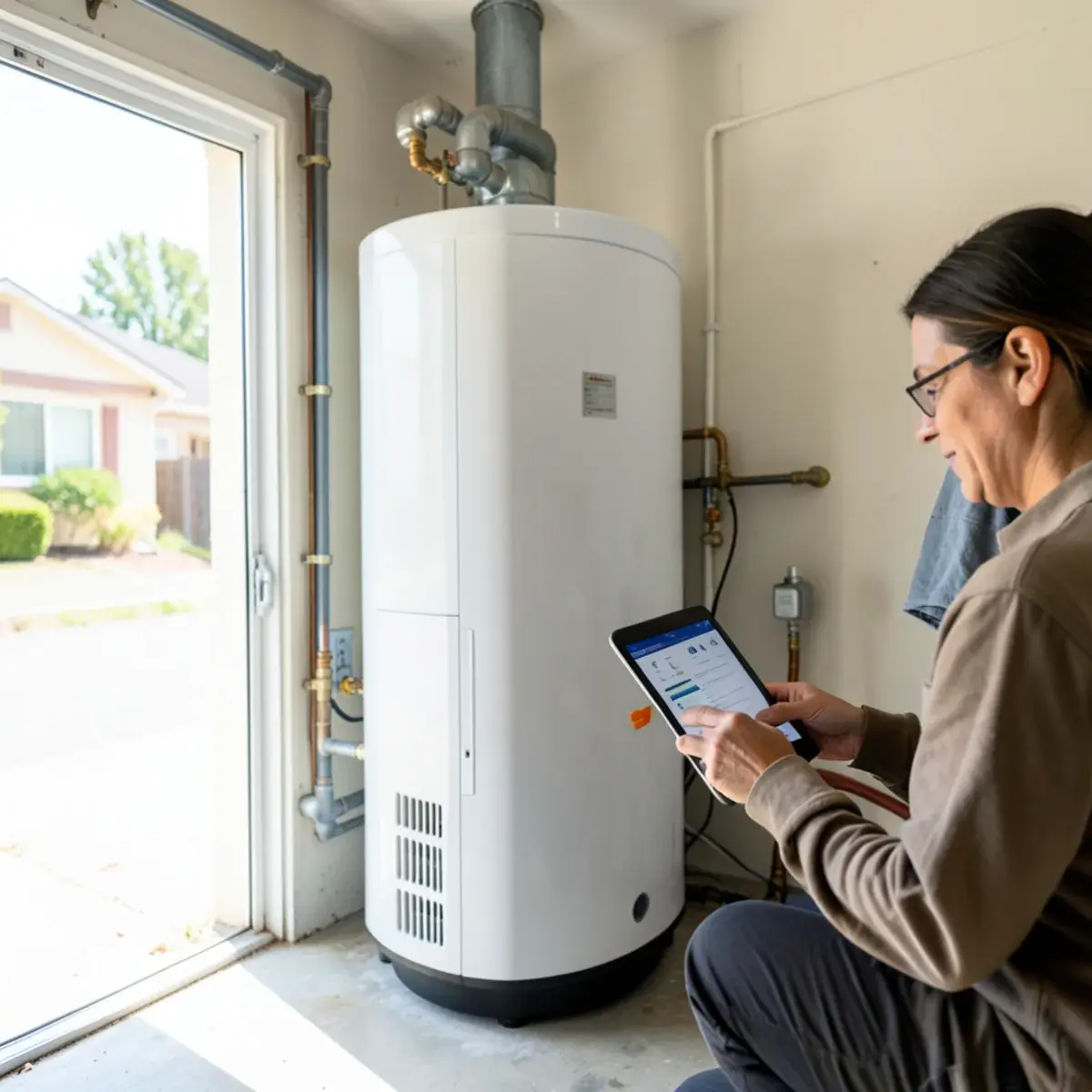
Heat-pump units need room to breathe — they pull heat from the air, so they want a reasonably large, unconditioned space, ideally a warm one. In Brentwood, a garage is often perfect: warm inland summers give the unit plenty of ambient heat to harvest. They also run a fan (some noise) and produce condensate that needs a drain. A cramped interior closet usually isn't suitable.
California Rebates and Incentives
California has offered several programs to encourage heat-pump water heater adoption, including statewide initiatives and utility-administered rebates. Programs, eligibility, and dollar amounts change frequently, so we won't quote a specific figure — that would be doing you a disservice. Instead, confirm current offers directly with your utility and the relevant state program before you buy. We're glad to point you to the right resources and design an install that keeps you eligible.
Is It Right for You?
If you have a suitable garage or utility space, want the lowest operating cost, and can take advantage of current incentives, a heat-pump unit is often the smartest long-term value. If space is tight or you have very high simultaneous demand, a tankless or efficient gas unit may fit better. We'll assess your space and usage honestly.
Is Your Home a Good Fit? A Quick Checklist
Before you bank on a heat-pump unit and its incentives, it's worth a quick reality check on whether your home suits one:
- Space: Is there a reasonably large, unconditioned area — a garage is ideal — with room for airflow around the unit?
- Warmth: Heat pumps harvest ambient heat, so a warmer location (Brentwood garages in summer are excellent) means higher efficiency.
- Drainage: Is there a path for the condensate the unit produces to drain safely?
- Noise tolerance: The fan makes some noise, so a spot away from bedroom walls is best.
- Electrical: Replacing a gas unit will mean adding an electrical circuit; replacing an electric tank usually won't.
If you tick most of these boxes, a hybrid heat-pump install is often the lowest-operating-cost choice available. If your space is tight, a tankless or efficient gas unit may fit better — we'll tell you honestly during the assessment.
Still deciding? Compare heat pump vs. tankless water heaters, and see how the Bay Area's zero-NOx rule affects new gas water heaters.
Frequently Asked Questions
How efficient is a heat-pump water heater?
Hybrid heat-pump water heaters are typically two to three times more efficient than standard electric tanks because they move ambient heat into the water rather than generating heat directly, dramatically lowering operating costs.
Are there rebates for heat-pump water heaters in California?
California has offered statewide and utility-administered rebates for heat-pump water heaters, but programs and amounts change regularly. Confirm current incentives with your utility and the relevant state program before purchasing.
Where should a heat-pump water heater be installed?
They work best in a reasonably large, unconditioned, and ideally warm space such as a garage, where there's ample ambient heat to harvest, room for airflow, and a path for condensate drainage. Tight interior closets usually aren't suitable.
Do heat-pump water heaters work in cold weather?
They're most efficient in warmer surroundings, which suits Brentwood's climate well. Most hybrid models include a backup electric element for colder conditions, so they keep producing hot water year-round.
Need help from a licensed Brentwood plumber?
We provide free on-site assessments and upfront quotes — and we pull the permit and handle the city inspection for you.