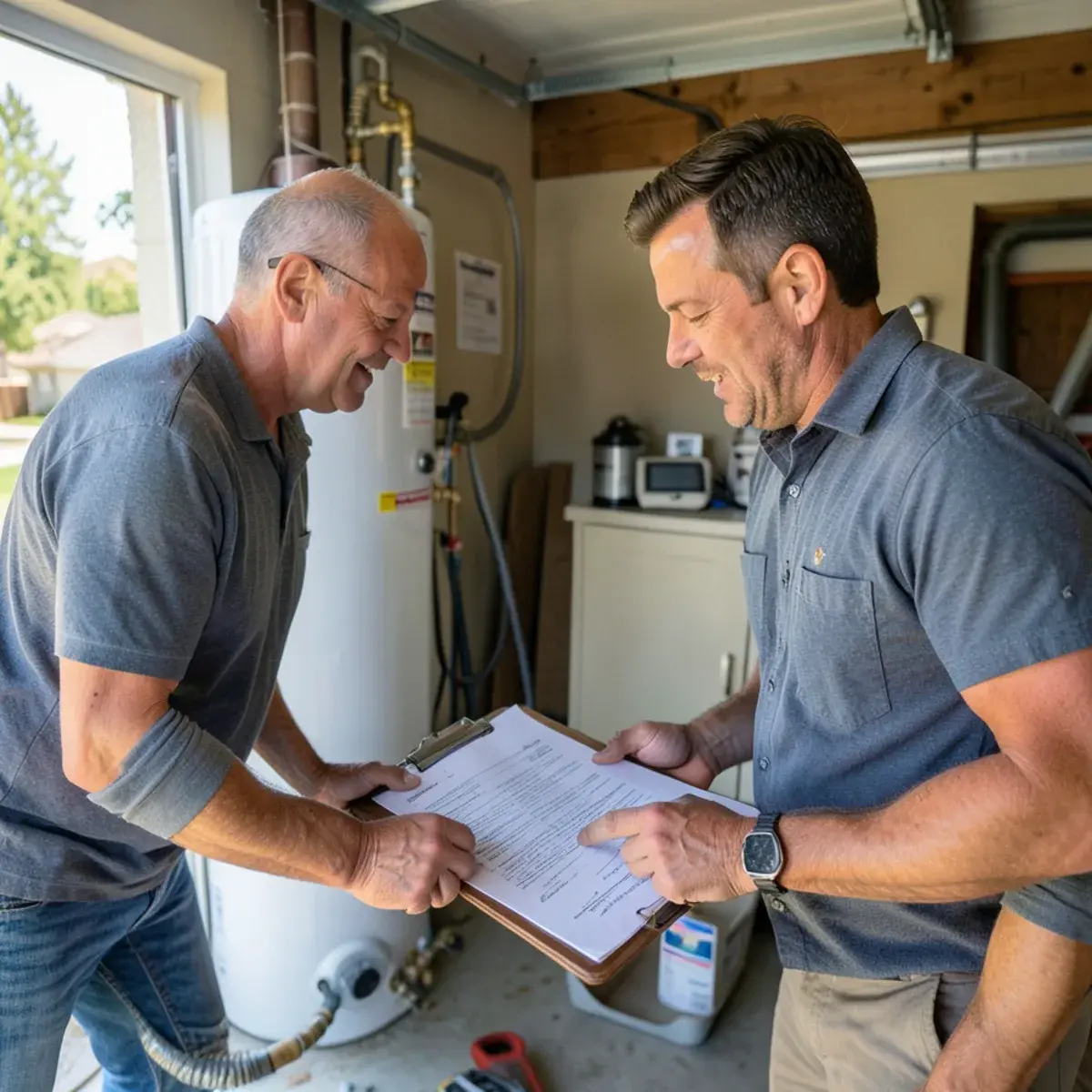
If you're staring down a failing water heater, the first question is almost always the same: what is this going to cost me? It's a fair question — and a frustrating one, because most companies dodge it with a vague "it depends." It does depend on real things, and once you understand what those are, you can read any quote like a pro and spot the lowball bids that balloon later. This guide breaks down what actually drives the price of a water heater installation for a Brentwood, CA home in 2026.
We don't publish fixed prices here, and you should be skeptical of anyone who does sight-unseen — your home, your existing setup, and current code requirements all move the number. What we can do is show you exactly which factors matter, so the free on-site quote you get is one you understand.
What Actually Drives the Price
Five things move a water heater installation cost up or down more than anything else. Get a handle on these and you'll understand 90% of any estimate.
1. Tank vs. tankless
This is the single biggest lever. A standard tank replacement is the most affordable path because the unit is cheaper and the install is straightforward. A tankless water heater costs more up front — both the unit and the labor — because it often needs a larger gas line, new venting, and electrical work. The trade-off is a longer lifespan and lower energy bills, which we cover in our tankless vs. tank comparison.
2. Fuel type
A like-for-like swap — gas for gas, electric for electric — is the cleanest job. Switching fuel types (say, converting to a hybrid heat-pump unit or doing a full tank-to-tankless conversion) adds labor for gas lines, venting, condensate drains, or electrical circuits.
3. Capacity and unit quality
A 40-gallon tank costs less than a 50- or 75-gallon one, and high-efficiency models cost more than builder-grade units but cut operating costs over time. If you're unsure what you need, our sizing guide walks through it.
4. Code upgrades
This is where surprise costs hide. California's plumbing code requires several things many older Brentwood installations are missing: seismic strapping, a code-compliant TPR discharge line, a drain pan for attic or interior installs, and a thermal expansion tank on closed systems. A reputable installer includes these in the quote; a lowball bid leaves them out and adds them later. Read the full breakdown in our California water heater code guide.
5. Labor, access, and haul-away
A water heater tucked into a tight attic or a second-floor closet takes longer than one sitting in an open garage. Removing and recycling the old unit (haul-away) is usually bundled in, but confirm it.
Repair vs. Replace: When Paying for Install Makes Sense
If your unit is under eight years old and the problem is a single component — a thermostat or element, a thermocouple, or a TPR valve — a repair is almost always the smarter spend. Once a tank passes 10–12 years, is leaking from the tank body, or needs a repair that approaches half the cost of a new unit, replacement wins. We'll always tell you honestly which side of that line you're on.
Why Brentwood Installs Have Their Own Cost Factors
Brentwood's hard water is the quiet budget item. Mineral-heavy water accelerates sediment buildup in tanks and scale in tankless heat exchangers, which shortens lifespan and can mean more frequent maintenance. Many homeowners pair a new unit with a water softener to protect the investment. The area's newer housing stock (most homes built 1995–2015) usually means accessible installs, but expansive local soils and the inland heat make code-correct strapping and venting non-negotiable.
How to Get an Honest Quote
The most reliable number comes from a real assessment. A trustworthy quote should be itemized, name the specific unit, include required code upgrades and permit fees, and cover haul-away. If it's a single round number with no detail, ask what's missing. Our free on-site assessment gives you an upfront, written quote with no obligation — and we pull the permit and handle the city inspection for you.
Frequently Asked Questions
Does a water heater installation in Brentwood require a permit?
Yes. California requires a plumbing permit for every water heater installation or replacement, even a like-for-like tank swap, and the city performs a final inspection. We pull the permit and manage the inspection as part of the job.
Is it cheaper to repair or replace my water heater?
If the unit is under eight years old and needs a single-component repair, repairing is usually more cost-effective. If it's over 10–12 years old, leaking from the tank, or the repair approaches half the price of a new unit, replacement is the better value.
Why is a tankless installation more expensive than a tank?
Tankless units cost more themselves and frequently require a larger gas line, new venting, and added electrical work. The higher up-front cost is offset over time by lower energy bills and a longer service life.
Do you charge for the quote?
No. We provide a free on-site assessment and an upfront, written quote with no obligation before any work begins.
Need help from a licensed Brentwood plumber?
We provide free on-site assessments and upfront quotes — and we pull the permit and handle the city inspection for you.