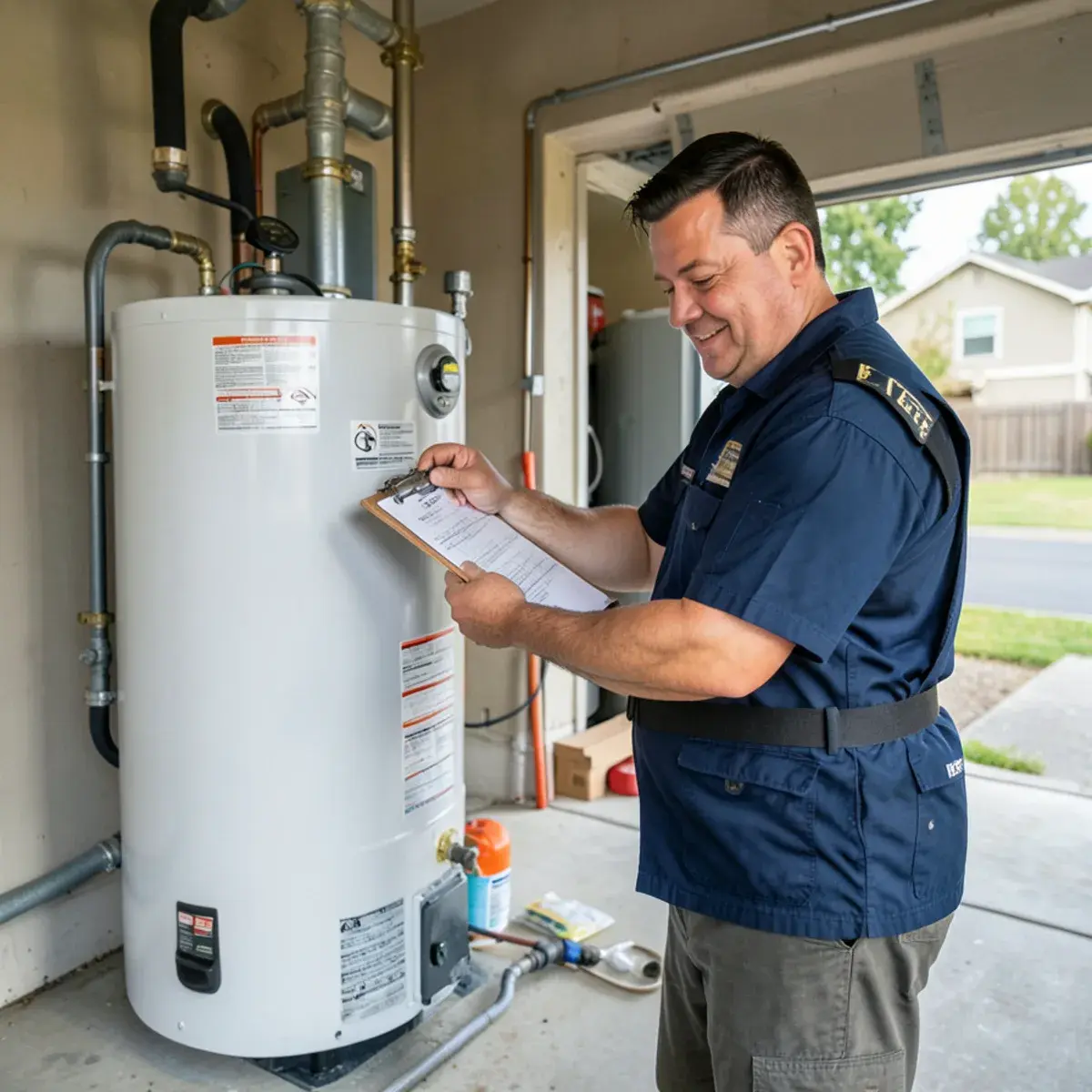
Yes. In California you need a permit to replace a water heater, even when the new one is the same size and fuel and goes in the exact same spot. The permit is what triggers a final inspection, and the inspection is where someone other than the installer checks the safety items that matter most on a water heater: the earthquake straps, the relief valve, the gas connection, and the venting.
This guide covers who pulls the permit, what the inspector looks at, which office issues permits in East Contra Costa, and what happens if your current heater was put in without one.
Why a Like-for-Like Swap Still Needs a Permit
California's plumbing code treats a water heater replacement as new work, not a repair. The old heater may have been installed under rules from 15 or 20 years ago, and the new one has to meet the code in effect today. That's the main reason the permit exists. A replacement is the one time those safety items get brought up to date.
It also protects you later. Unpermitted water heater work can come up during a home sale inspection, and an insurer looking at a water or fire claim may ask whether the work was permitted.
Will Replacing My Water Heater Trigger Code Upgrades?
Usually, yes, at least a few. The new installation has to meet current code, so anything the old install was missing gets added. In East County homes we commonly add:
- A second seismic strap. Code requires straps in the upper and lower third of the tank, anchored to studs.
- A corrected relief-valve discharge line that runs downward and ends 6 to 24 inches above the floor, uncapped.
- A thermal expansion tank if the home has a pressure regulator or backflow device, which makes it a closed system.
- A drain pan if the heater sits in an attic or over finished space where a leak would cause damage.
- A new gas connector, shutoff valve, or sediment trap when the existing ones are old or missing.
- Venting corrections such as proper slope, clearances, and a vent sized for the new unit.
None of these are upsells. The inspector checks them, and the install won't pass without them. Our California water heater code guide explains each requirement in more detail.
Who Pulls the Permit?
When you hire a licensed plumbing contractor, pulling the permit is part of the job. The contractor applies, pays the fee, and schedules the inspection. Every water heater replacement we do includes it.
Homeowners can usually pull an owner-builder permit for work on their own home, but then the homeowner is responsible for meeting code and passing the inspection. If you hire someone to install it under your owner-builder permit, check that they hold a California contractor's license. Unlicensed contractors can't legally take jobs above a small dollar threshold, and you lose most of your protection if something goes wrong.
Where to Get a Water Heater Permit in East Contra Costa
The permit comes from whichever agency handles building permits for your address:
- Incorporated cities issue their own permits. Brentwood, Antioch, Oakley, Pittsburg, Concord, Clayton, Pleasant Hill, Walnut Creek, and Martinez each have a building division.
- Unincorporated communities like Byron, Knightsen, Discovery Bay, Bethel Island, and Bay Point go through Contra Costa County's Department of Conservation and Development.
- Tracy and Mountain House are in San Joaquin County. Both are incorporated cities (Mountain House since 2024) with their own permit offices.
If you're unsure, the address lookup on your county assessor's site will tell you whether a property is inside city limits. We handle this for every job, so most of our customers never have to think about it.
What the Inspector Checks
Inspections for a water heater replacement are usually short, but they're thorough on the items that cause real damage when they're wrong. Expect the inspector to look at:
- Seismic strapping — two straps at the correct heights, solidly anchored.
- TPR valve and discharge line — correct material, no reduction in size, no cap, terminating at the right height.
- Gas connection — an accessible shutoff valve, a sediment trap, a listed connector, and a leak-free fitting.
- Venting and combustion air — correct vent size and slope, safe clearances, and enough air for closet installs.
- Garage elevation — burners 18 inches above the floor unless the unit is FVIR-listed.
- Expansion tank and drain pan where required.
- Electrical on electric and heat-pump models — a dedicated circuit and a disconnect.
Many inspectors also verify that the home has working smoke and carbon monoxide alarms, since California requires them when permitted work exceeds a set value. Some jurisdictions also ask for a Title 24 energy compliance form for water heater changes, especially when switching fuel types.
How Long Does It Take?
For a straightforward replacement, the permit is often issued the same day or within a day or two, and in many cases the new heater can be installed and in use before the inspection. The final inspection is then scheduled, typically within a few days to a couple of weeks depending on the city's workload. Ask your installer how they handle the timing so you're not without hot water while waiting.
What If My Water Heater Was Installed Without a Permit?
It's common, especially in homes that changed hands several times. The simplest fix is to make sure the next replacement is permitted, since the new installation and its inspection create a clean record. If you're selling soon or an inspector has flagged the unit, a contractor can sometimes obtain an after-the-fact permit and correct whatever the inspection turns up, which often means adding straps, an expansion tank, or a proper discharge line.
Frequently Asked Questions
Do I need a permit to replace a water heater in California?
Yes. California requires a plumbing permit and final inspection for every water heater replacement, including a like-for-like swap in the same location.
Who is responsible for getting the permit?
Your licensed contractor pulls the permit and schedules the inspection as part of the job. If you do the work yourself, you can usually pull an owner-builder permit, and you're responsible for passing the inspection.
Will a new water heater require code upgrades?
Usually some. The new install has to meet current code, so missing straps, an incorrect relief-valve line, a missing expansion tank on a closed system, or outdated venting get corrected at replacement.
What happens if I replace a water heater without a permit?
Nothing may happen right away, but unpermitted work can complicate a home sale or an insurance claim, and nobody has verified the safety items. An after-the-fact permit is sometimes possible.
Do tankless and heat-pump water heaters need permits too?
Yes. Tankless units usually involve gas line and venting work, and heat-pump water heaters involve electrical work and a condensate drain, so both need a permit and inspection.
Need help from a licensed Brentwood plumber?
We provide free on-site assessments and upfront quotes — and we pull the permit and handle the city inspection for you.