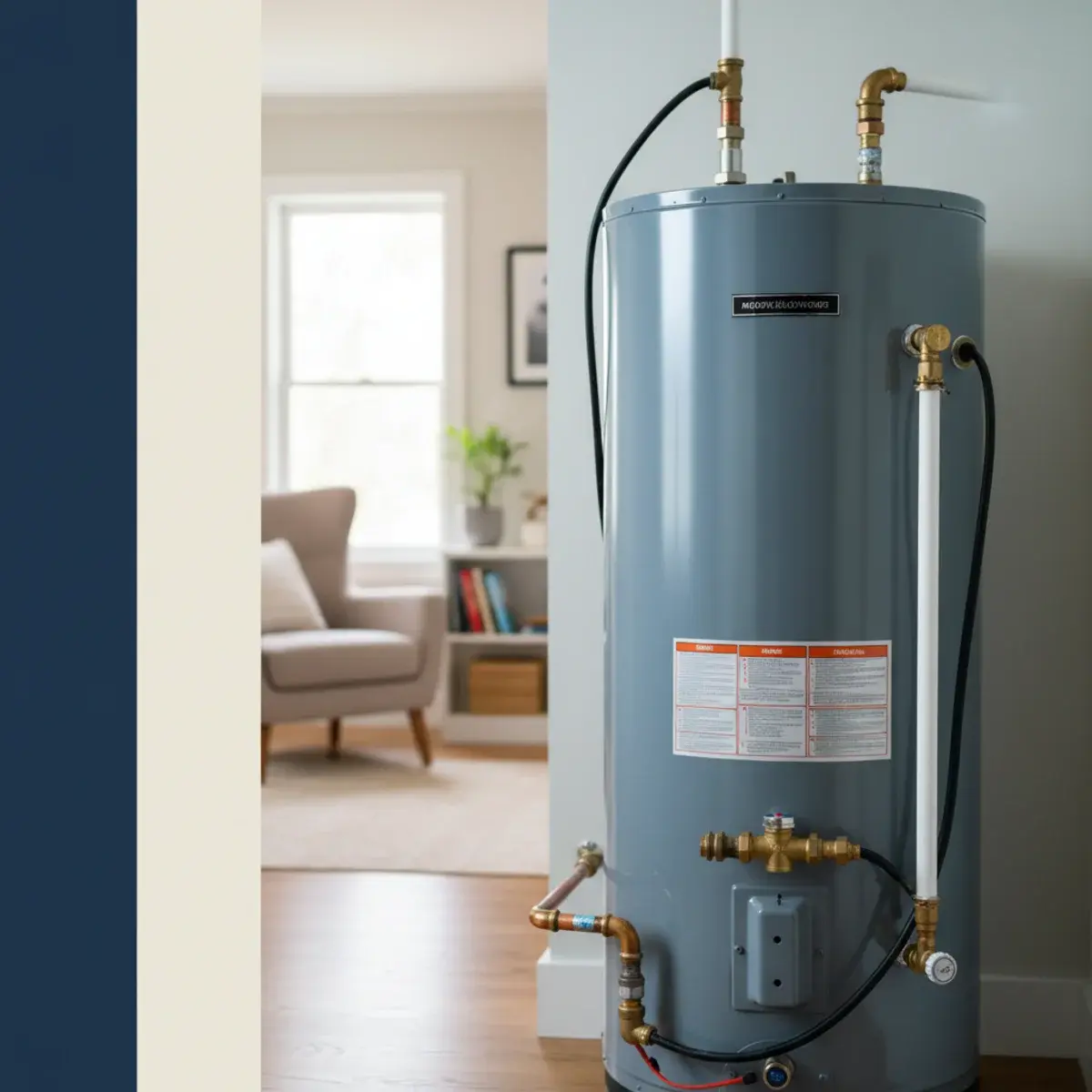
Buy a water heater that's too small and you'll fight over the last warm shower every morning. Buy one that's too big and you'll pay to heat water you never use. Sizing it right is the single most important decision when you replace a unit — and it's not complicated once you know the two numbers that matter: gallons for tank units and GPM for tankless. Here's how to size a water heater for your Brentwood home.
Tank Sizing: Think in Gallons
Tank water heaters are sized by storage capacity. The rough guide by household size:
- 1–2 people: 30–40 gallons
- 2–3 people: 40–50 gallons
- 3–4 people: 50 gallons
- 5+ people: 75–80 gallons
But household size is only half the story. What really matters is peak demand — the busiest hour of your day. A four-person home where everyone showers within the same hour needs more capacity than the headcount alone suggests. For the classic dilemma, see 50-Gallon vs. 40-Gallon.
First-hour rating
When comparing tanks, look at the first-hour rating (FHR): how much hot water the unit can deliver in a busy hour, combining stored and freshly heated water. Match the FHR to your peak-hour demand and you've sized it correctly.
Tankless Sizing: Think in GPM
Tankless units never run out, so you don't size them by gallons — you size them by flow rate in gallons per minute (GPM). Add up the fixtures you might run at once:
- Shower: ~1.5–2.5 GPM
- Kitchen faucet: ~1.5 GPM
- Bathroom faucet: ~1.0 GPM
- Washing machine: ~2.0 GPM
If two showers and a sink could run together, you might need 5–6 GPM of capacity. Brentwood's incoming groundwater is cool enough that the temperature rise required also affects which unit hits your target GPM — something we calculate during the assessment.
Other Factors
Fuel type affects recovery: gas tanks reheat faster than electric, so a gas unit can sometimes run a size smaller. Hard water in Brentwood means sediment and scale reduce effective capacity over time, so maintenance keeps your sized-correctly unit performing as intended. Our full sizing guide hub has anchored sections for every common capacity.
Common Sizing Mistakes to Avoid
The most frequent mistake is sizing by headcount alone. Two four-person households can have very different needs depending on whether everyone showers in the same rushed hour or spreads usage across the day — peak-hour demand is what actually matters, not the number on the lease. The second common error is oversizing "to be safe," which just means paying to keep extra water hot 24/7 that you never use.
A third trap is ignoring fuel and recovery: a gas unit reheats faster than electric, so a 40-gallon gas tank can sometimes do the work of a 50-gallon electric one. And for tankless, people forget that incoming groundwater temperature affects how much a unit can heat at a given flow — Brentwood's cooler winter inlet water means the same unit delivers fewer usable GPM in January than July. We account for all of this during a free assessment so the unit fits your real demand, not a rule of thumb.
Frequently Asked Questions
What size water heater do I need for a family of four?
A 50-gallon tank suits most four-person households, though a 40-gallon gas unit with a high recovery rate can work if hot-water use is spread out. The deciding factor is peak-hour demand, not just headcount.
How do I size a tankless water heater?
Size tankless units by flow rate in gallons per minute. Add up the GPM of the fixtures you might run simultaneously — for example two showers plus a sink — and choose a unit that meets that combined demand at your required temperature rise.
Is a bigger water heater always better?
No. An oversized tank wastes energy keeping extra water hot that you never use. The goal is matching capacity to your actual peak demand, not buying the largest unit available.
Does gas vs. electric change the size I need?
It can. Gas units reheat water faster than electric ones, so a gas tank may meet the same demand at a slightly smaller capacity. Recovery rate is part of correct sizing.
Need help from a licensed Brentwood plumber?
We provide free on-site assessments and upfront quotes — and we pull the permit and handle the city inspection for you.