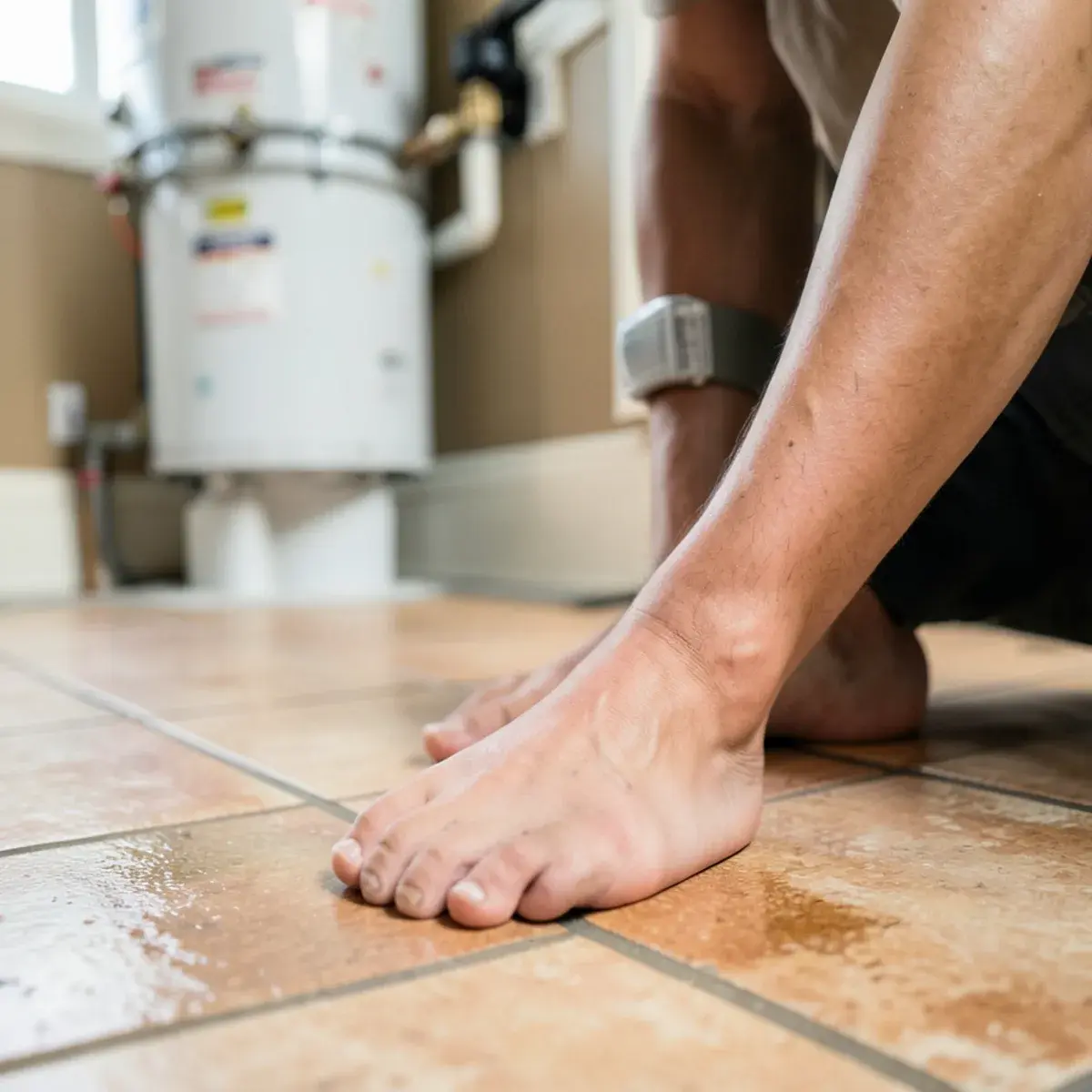
A slab leak is a leak in a water line running under or through your home's concrete foundation. Because the pipe is buried in concrete, you usually don't see water at all. You notice the side effects instead, and often only after the leak has been running for a while. This guide covers the signs to watch for, a simple test you can do yourself, why slab leaks are common in East Contra Costa, and what happens next.
The Most Common Signs of a Slab Leak
1. A warm or hot spot on the floor
If a hot-water line is leaking under the slab, the escaping water heats the concrete above it. You may notice a warm patch on tile or hardwood, often discovered barefoot or by a pet that suddenly favors one spot.
2. The sound of running water when everything is off
A hissing or rushing sound in a wall or under the floor, with no faucets, toilets, irrigation, or appliances running, is a classic sign.
3. A water bill that jumps without explanation
A slab leak runs constantly, so even a small one adds up. A noticeable increase compared with the same billing period last year, with no change in how you use water, deserves a look.
4. Your water meter moves with all water off
This is the most reliable test you can do yourself (details below).
5. Damp flooring, mildew smells, or lifting floors
Carpet that's damp near a wall, a musty smell, or laminate and hardwood that starts cupping or lifting can all mean water is coming up from below.
6. Your water heater runs more than usual
A leak on the hot side means your water heater keeps heating replacement water around the clock. If it seems to be running constantly or your gas or electric bill rises along with your water bill, a hot-side leak is possible.
7. Low water pressure
A larger leak can reduce pressure at fixtures, though this is less common than the signs above.
8. New cracks in walls or flooring
Cracks can have many causes, but a long-running leak that saturates soil under a slab can contribute to movement.
The Water Meter Test
- Turn off every water fixture and appliance, including irrigation, ice makers, the water softener, and any running toilets.
- Find your water meter, usually in a box near the curb.
- Look at the leak indicator, often a small triangle or dial. If it's moving, water is flowing somewhere.
- For slow leaks, write down the reading, wait an hour or two without using any water, and check again.
If the meter moves, the leak could be in a toilet, an irrigation line, the line from the meter to the house, or under the slab. Shutting off the main valve at the house and watching the meter again helps narrow it: if the meter still moves with the house valve closed, the leak is between the meter and the house.
Why Slab Leaks Are Common in Brentwood and East County
Three local conditions add up:
- Expansive clay soils. Much of East Contra Costa sits on clay that swells in wet winters and shrinks in hot, dry summers. That movement puts stress on pipes in and under the slab.
- Slab construction with copper lines. Many homes built from the 1990s through the 2000s use slab foundations with copper water lines underneath.
- Hard water and heat. Mineral-heavy water and the constant expansion and contraction of hot-water lines wear on pipe over time, which is why hot-side leaks are especially common.
What Happens Next: Finding and Fixing It
A professional slab leak detection visit typically starts by confirming the leak with pressure testing and isolating whether it's on the hot or cold side. Acoustic equipment and thermal imaging then locate it precisely, so nothing is opened until the spot is marked.
You then have three main repair options:
| Option | What it involves | When it makes sense |
|---|---|---|
| Spot repair | Opening a small section of slab to repair the pipe directly | A first, isolated leak in an accessible spot |
| Reroute | Abandoning the under-slab line and running a new one through walls or the attic | A line that has leaked before, or sits under expensive flooring |
| Repipe | Replacing the home's water lines | Homes with repeated leaks or aging pipe throughout |
Reroutes and repipes require a permit and inspection. If you're considering a full repipe, see repiping and water line replacement.
Insurance and Documentation
Many homeowners policies cover the cost of accessing the leak and repairing resulting water damage, but not replacing the failed pipe itself. Policies vary, so check yours, and document everything: photos, your water bills, and the plumber's written findings. Our article on homeowners insurance and water damage covers how claims typically work.
What to Do Right Now
If you suspect a slab leak and can see water or the meter is spinning quickly, shut off the main water valve to the house to limit damage, then call for leak detection. If water is spreading, treat it as an emergency.
Frequently Asked Questions
How do I know if I have a slab leak?
The strongest signs are a warm spot on the floor, the sound of running water with everything off, an unexplained jump in your water bill, and a water meter that keeps moving when no water is being used.
Can a slab leak fix itself?
No. A slab leak keeps running and usually gets worse as water erodes the pipe and surrounding soil.
Is a slab leak an emergency?
It's urgent rather than an immediate emergency in most cases, but it shouldn't wait. If water is visibly spreading, shut off the main valve and call right away.
Should I repair or reroute a slab leak?
A single, accessible leak can often be repaired directly. If the pipe has leaked before or is under expensive flooring, rerouting the line out of the slab is usually the better long-term fix.
Need help from a licensed Brentwood plumber?
We provide free on-site assessments and upfront quotes — and we pull the permit and handle the city inspection for you.