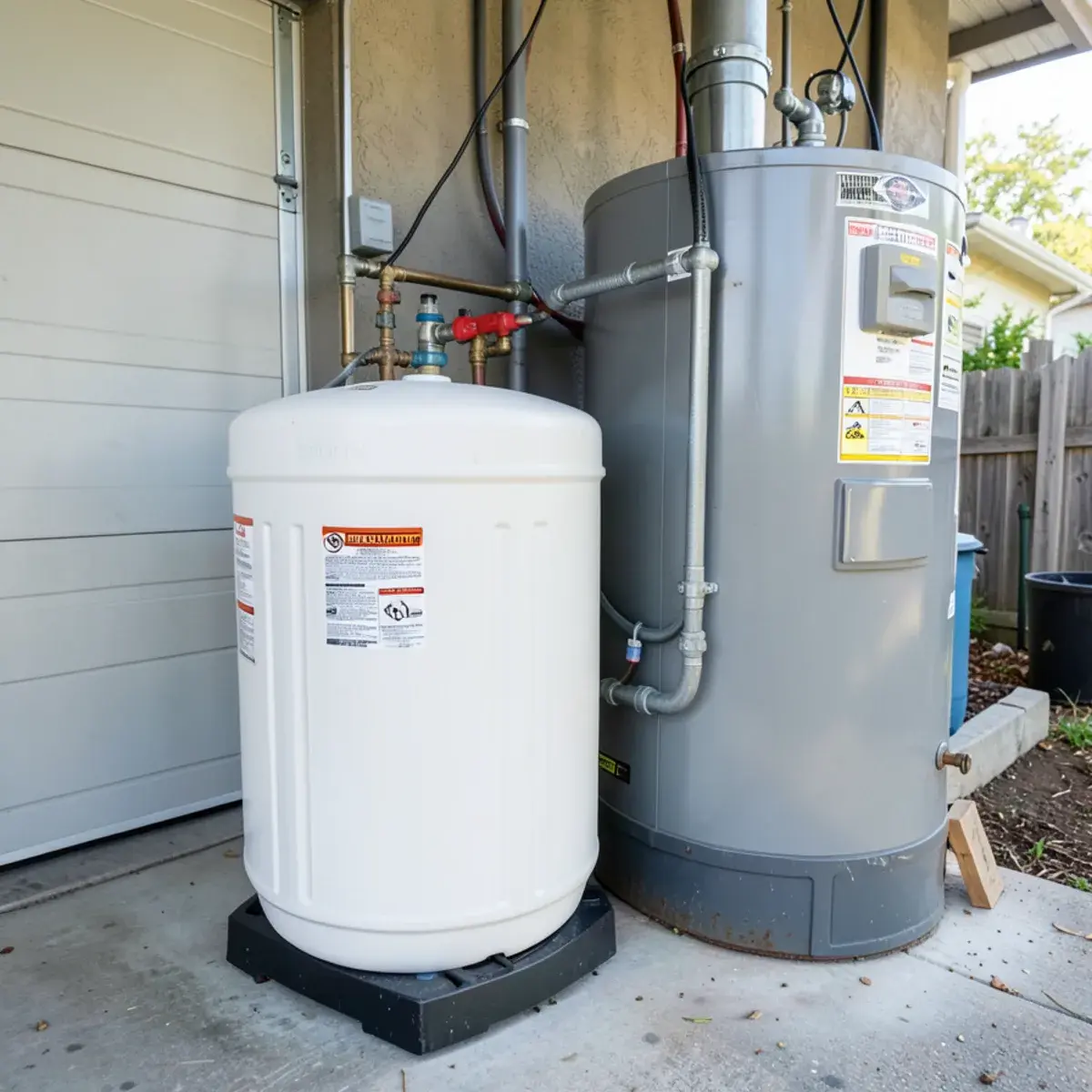
A water softener tends to fail quietly. There's no leak or loud noise, just hard water slowly coming back: spots on dishes, scale on the shower door, and in East Contra Costa, faster scale buildup in your water heater. This guide covers how long softeners typically last, the signs yours has stopped working, the fixes to try first, and when replacement is the better choice.
How Long Does a Water Softener Last?
Many residential softeners last around 10 to 15 years. The two parts that wear out are:
- The resin bed, the small beads inside the tank that actually remove calcium and magnesium. Over time the beads break down and lose capacity. Chlorine or chloramine in municipal water can shorten resin life.
- The control valve, the head on top that times regeneration cycles. Seals, pistons, and electronics wear out.
Either can often be replaced on its own. Whether that makes sense depends on the age and condition of the rest of the system.
Signs Your Water Softener Isn't Working
Hard-water symptoms are back
White spots on glassware, scale on faucets and shower heads, soap that doesn't lather well, or a stiff feel to laundry are the most common first signs.
Salt level isn't dropping
If the salt in the brine tank hasn't gone down in weeks, the softener probably isn't regenerating. Check for a salt bridge, a hard crust that forms above the water and leaves an empty space underneath. Pushing a broom handle gently through the salt breaks it up.
Water in the brine tank is too high
Standing water well above normal can mean a clogged brine line, a stuck float, or a control valve problem.
Resin beads in your water
Small amber or tan beads in faucet aerators or the toilet tank usually mean a broken internal distributor. The resin is escaping into your plumbing.
Your water heater is scaling again
If you've had a softener for years and your tankless water heater suddenly needs more frequent descaling, or your tank starts rumbling, the softener may have stopped doing its job. See our tankless descaling guide.
The unit never seems to regenerate
Most control valves show a regeneration schedule or status. If it's stuck, blank, or making grinding noises, the valve may be failing.
Things to Check Before Replacing It
- Salt: refill it, and break up any salt bridge.
- Settings: confirm the clock is right (after a power outage) and the hardness setting matches your water.
- Bypass valve: make sure it wasn't left in bypass after plumbing work.
- Brine line and injector: these can clog with sediment and are often cleanable.
- Test the water: an inexpensive hardness test strip shows whether softened water is actually soft.
Repair, Re-Bed, or Replace?
| Situation | Usually the best option |
|---|---|
| Unit under about 10 years, control valve fine, resin worn | Replace the resin bed |
| Control valve failing on an otherwise good tank | Replace or rebuild the valve |
| Unit 12–15+ years old with multiple issues | Replace the system |
| Household water use has grown a lot | Replace with a correctly sized unit |
| Leaking or cracked mineral or brine tank | Replace the system |
A newer softener can also be more efficient. Demand-initiated models regenerate based on how much water you've used instead of on a fixed timer, which can reduce salt and water use.
Sizing the Replacement
A softener should be sized to your water's hardness and your household's daily water use. An undersized unit regenerates constantly and wears out sooner; an oversized one can be inefficient. We test your water and size the system during a free assessment. If you also want better-tasting drinking water, filtration can be added at the same time. See water softener installation and replacement.
Why It Matters for Your Water Heater
Hard water is the leading cause of scale in water heaters in East Contra Costa. Scale reduces efficiency, causes rumbling in tanks, and triggers error codes and shutdowns in tankless units. A working softener is one of the best ways to extend your water heater's life. If yours has stopped working, it's worth fixing even before you notice spots on the dishes.
Frequently Asked Questions
How long does a water softener last?
Many residential water softeners last about 10 to 15 years. The resin bed and control valve can often be replaced separately to extend the system's life.
How do I know if my water softener needs to be replaced?
Hard-water spots and scale come back, the salt level stops dropping, resin beads show up in your water, or the unit no longer regenerates. If simple fixes like breaking a salt bridge or resetting the clock don't help, it's time for a service visit.
Can you replace just the resin in a water softener?
Yes. Re-bedding the resin is a common repair and is often worth it on a unit with a good control valve and tank.
Do I need a permit to replace a water softener in Brentwood?
The City of Brentwood lists water softeners among projects that may require a permit. We confirm the requirement for your address and handle it if needed.
Need help from a licensed Brentwood plumber?
We provide free on-site assessments and upfront quotes — and we pull the permit and handle the city inspection for you.